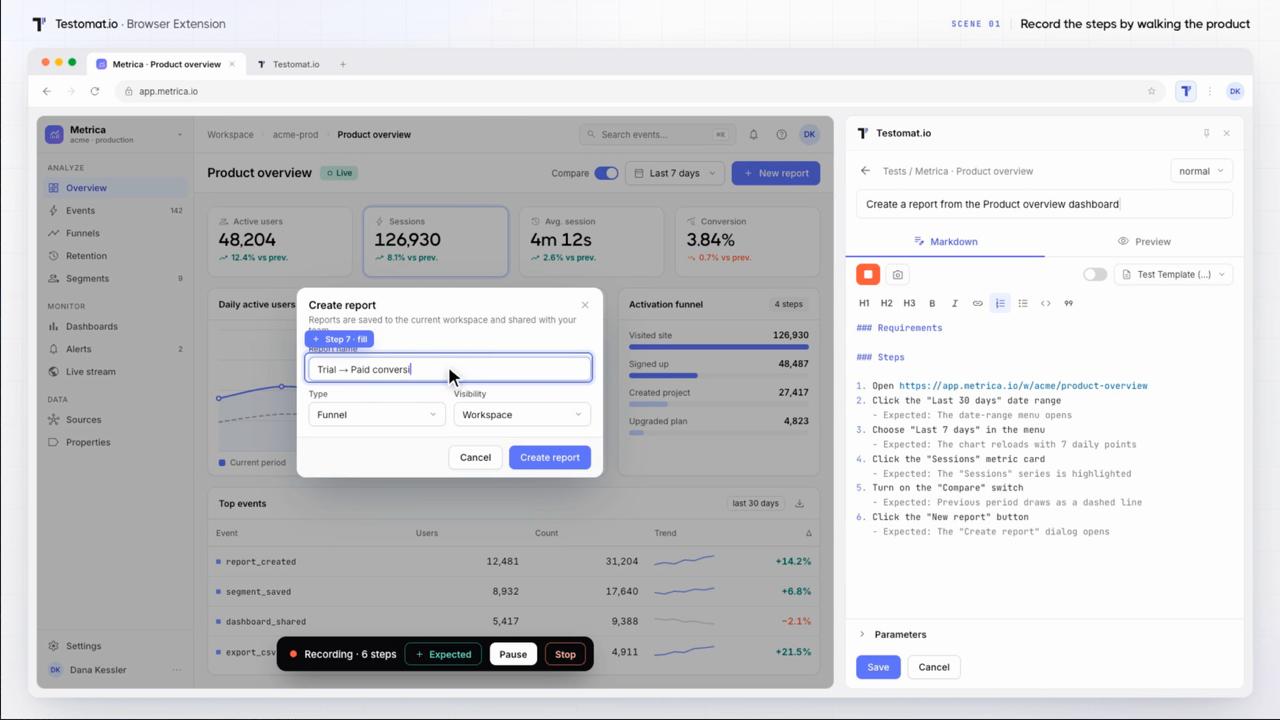


QA teams have a wide choice of test management tools today. Many teams start with an open source test tool because it has no license fees.
Open source test management software is a free alternative to paid enterprise test management tools.
Why QA teams choose open source test management tools
No license fees and no vendor lock-in. Open source test case management systems attract many test engineers because they cost nothing to use. You also get access to the source code, so you can study how the tool works and adapt it to your process.
Full control over test artifacts. You install open source test management software on your servers. Your test data stays inside your infrastructure, as with an on-premise license, and no SaaS vendor stores it. Self-hosting needs more work at the start, and in return you decide where to keep your data. This matters for teams that build legal software or other products with strict security requirements.
Free open source test management software works well for simple web development projects. It covers the basic test management tasks. You can design and store test cases. You can also run tests and check the results with basic metrics.
Below you will find a shortlist of open source test case management tools and a comparison table.
TestLink: a popular open source test case management tool
TestLink is well known among QA engineers. Many of them list TestLink in the skills section of their LinkedIn profiles.
TestLink is fully open source under the GNU General Public License (GPL). You can find the 👉 TestLink source code on GitHub. According to the project README, version 1.9.20 is the last version of the 1.9.x family.
TestLink is a web-based tool. You install it on your server and connect it to a database. Before the installation, you need an Apache web server, PHP and a database server such as MySQL.
TestLink supports test design and test planning. You can group test cases into test suites and manage projects and users. The built-in requirements specification lets you link requirements to test cases. Charts and reports help you track the progress of the project.
TestLink integrates with bug trackers such as Jira, YouTrack, GitLab and Bugzilla.
TestLink supports manual and automated test execution. With the TestLink plugin for Jenkins, you can import TestNG, JUnit and TAP reports and update the results of TestLink test cases. Several users can generate test reports in real time in MS Word, Excel and HTML formats.
Main features of TestLink
- Flexible user roles
- Test plans and test suites
- Test case creation and execution
- Custom fields
- Test runs on different builds and platforms
- Charts and metrics
- Test result reports
- Bug tracker integration
- API for integration with other tools
TestLink user reviews
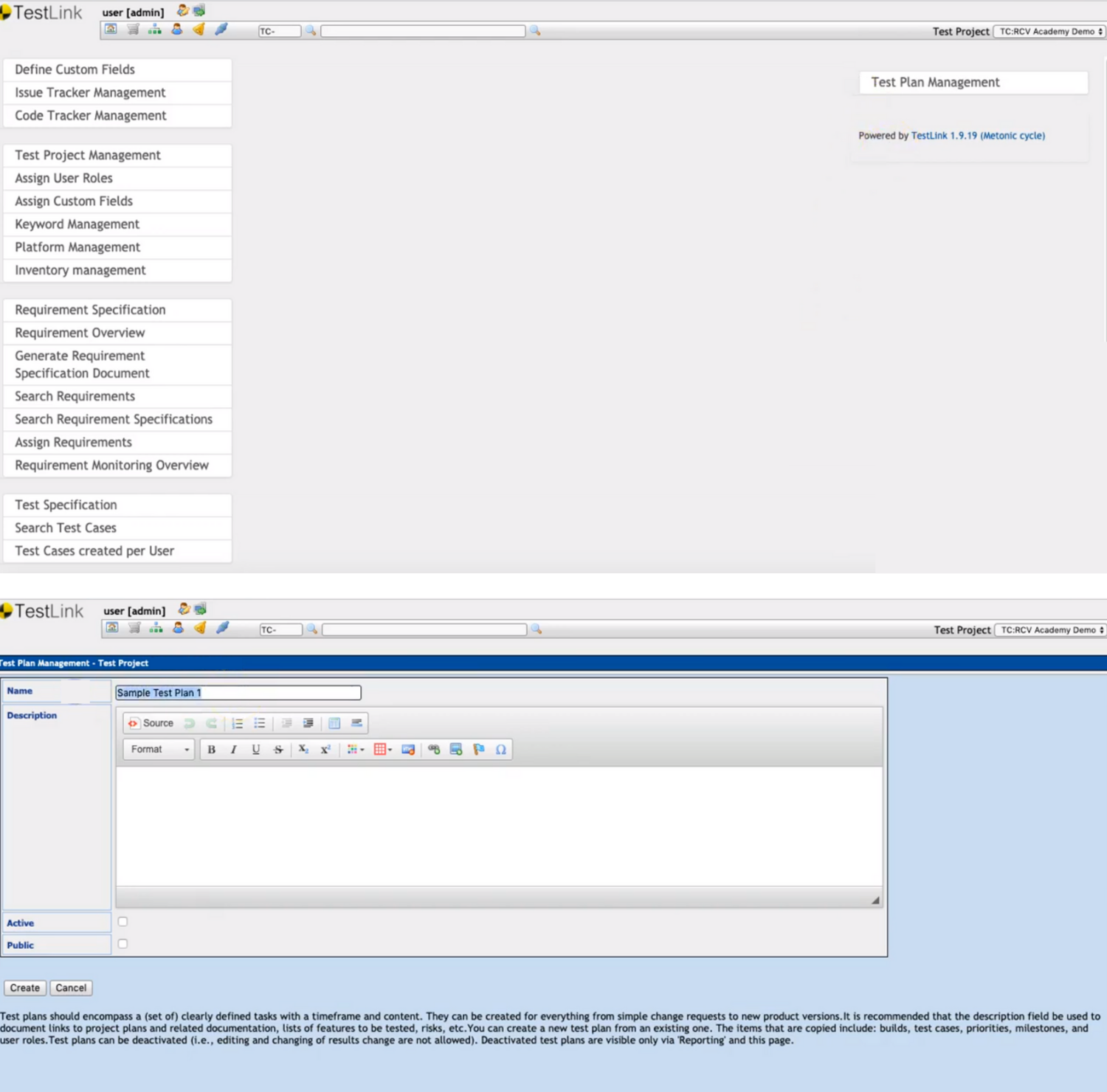
TestLink users say the tool covers the basic tasks, but its user experience (UX) needs improvement. For example, here is the Test Plan setup in TestLink:
Kiwi TCMS: open source test management with Docker deployment
Kiwi TCMS is a test case management system for manual and automated testing. Its team says the goal is to make testing more organized and transparent for the whole QA team.
Kiwi TCMS is open source under the GPL 2 license. You host it on your servers, and a ready Docker image helps you start the system from scratch.
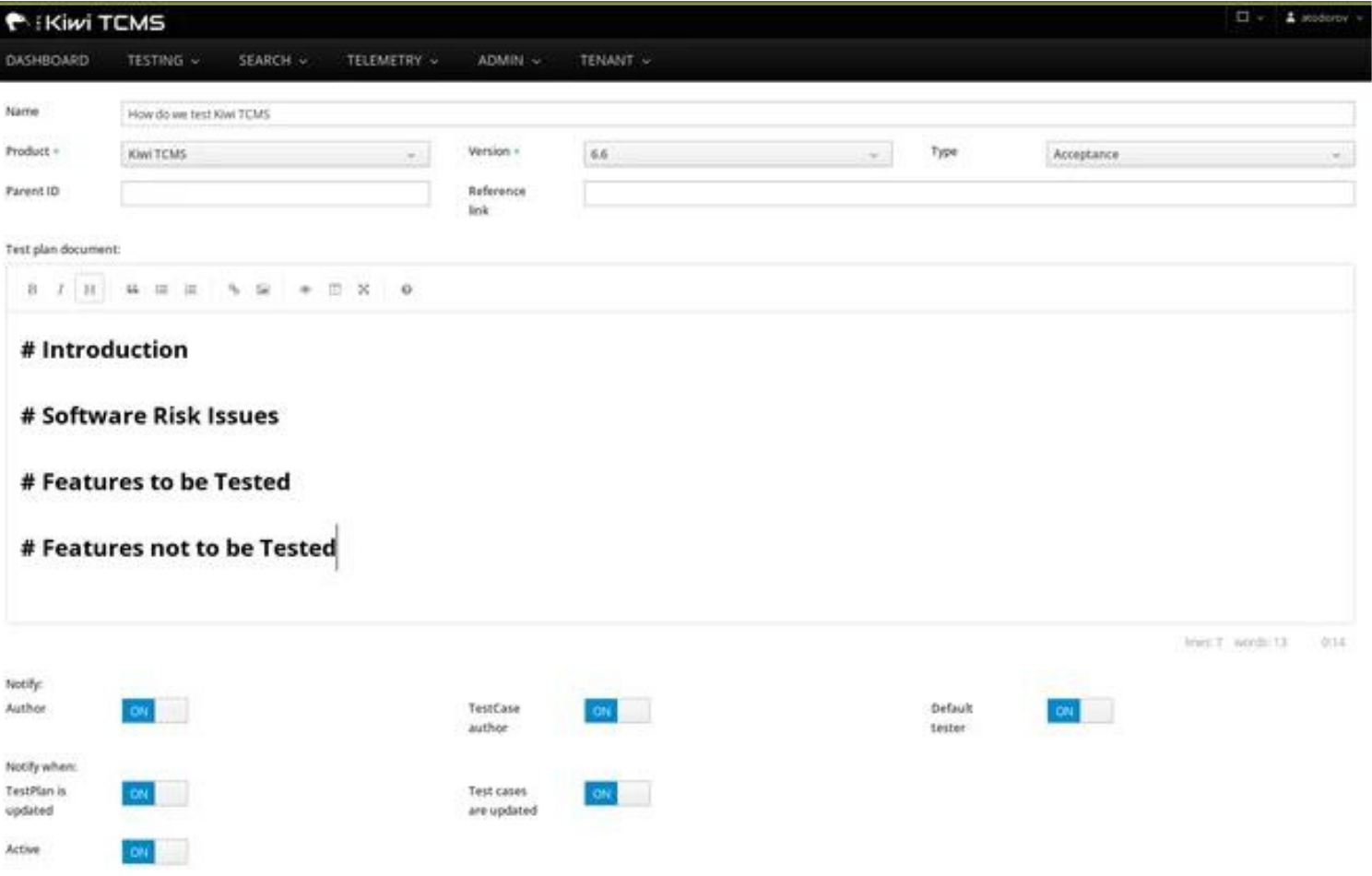
You can create test plans and write test cases in a Markdown editor. The team can review and clone test cases. Tags help you sort them. The dashboard shows pending work, and you can assign work across teams and track progress. Kiwi TCMS also keeps the history of changes and sends email notifications.
Kiwi TCMS collects automation results through test runner plugins for TAP, JUnit, TestNG, pytest and other frameworks. The external API works over JSON-RPC and XML-RPC, and there is an API client in Python.
For bug tracking, Kiwi TCMS integrates with Bugzilla, Jira, GitHub, GitLab and other tools. You can also find Kiwi TCMS on GitHub Marketplace.
The Kiwi TCMS code is free to use. The team also sells paid subscriptions, for example a hosted Private Tenant with support. Prices change, so check the official Kiwi TCMS site before you decide.
Main features of Kiwi TCMS
- Test plan and test case creation
- Test execution with result tracking
- Peer review of test cases
- User access control
- Bug tracker integrations
- Test runner plugins for automation frameworks
- Testing telemetry and visual reports
- External API with JSON-RPC and XML-RPC
Kiwi TCMS user reviews
Users quoted on the official Kiwi TCMS site say their QA teams use it to document test scenarios and peer-review them. Another user says the tool helped the team build and run manual regression tests.
Here is the Kiwi TCMS Test Plan interface for comparison:
Squash TM: open source case management software for test teams
In our opinion, Squash is the most interesting tool on this shortlist.
Squash is a modular test management suite from Henix, a French company. It helps you design and run manual and automated tests. Squash TM is the test repository at the core of the suite.
Henix offers Squash as a single product with Community, Premium and Ultimate license levels. The Community edition is free, and its core is open source under LGPL v3. Premium and Ultimate add commercial plugins and professional support. Henix calls this an open core model. If you need test case management with an open source core and paid upgrade options, Squash is a good fit.
You can install Squash on your servers, with Docker if you prefer. Henix also offers paid cloud editions hosted on French servers.
The vendor says Squash fits different project contexts: V-cycle and Agile, including agile at SAFe scale.
For Jira users, Henix offers Xsquash, an app on the Atlassian Marketplace. It syncs Jira issues with Squash requirements.
Squash TM offers many ways to structure tests, including BDD test cases. In the free Community edition, you can create requirements and test cases and run them.
Squash TM keeps requirements, test cases and campaigns in separate workspaces. You can sort items into folders and subfolders, and group test cases into test suites and test plans.
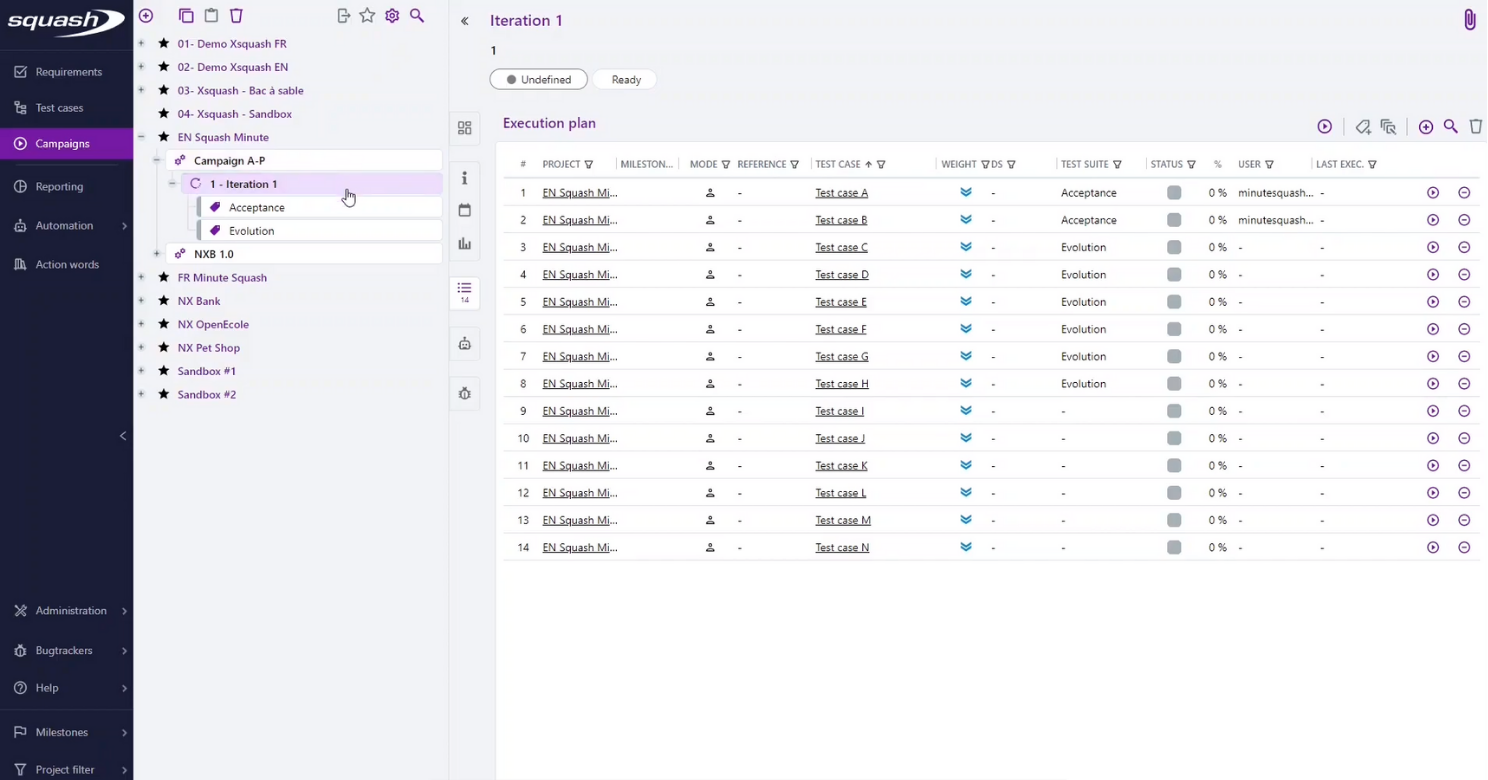
Test execution in Squash works through campaigns. A test manager creates a campaign that groups a set of test cases. Then the manager assigns test cases to testers.
Squash TM reports cover requirements and test cases, whether the team executed the tests or not. You can export reports to PDF and share them with stakeholders.
Main features of Squash TM
- Isolated projects
- Requirements management with custom fields and versioning
- Links between requirements and test cases
- Jira sync through Xsquash
- Test cases with custom fields
- Parameters and datasets in test steps and preconditions
- BDD test cases in Gherkin
- Campaigns and iterations with custom fields
- Global search for test cases
- Test execution reports
- Collapsible test steps in the UI
- Support for automation frameworks such as Cypress, Playwright and Robot Framework
Squash TM user reviews
Squash suits teams of different sizes. Some users say new team members need time to learn the tool.
Here is the Squash TM Test Plan interface:
Test data management: open source options for QA teams
Test case management tools keep test data inside test cases, in steps and preconditions. They differ in how much help they give with this data.
In Squash TM, you add parameters to test steps and preconditions. Then you create datasets with values for these parameters. When you add a test case with several datasets to an execution plan, Squash TM adds it once for each dataset. Squash can also pass parameters and datasets to automated tests, for example Cucumber or Cypress tests.
TestLink offers custom fields, which you can use to store extra test data for a test case.
For production-like data, you need dedicated open source test data management tools. For example, Faker libraries generate fake names and addresses for tests. Jailer extracts consistent subsets of a production database, so you can load them into a test environment.
Open source test management tools comparison
Can’t decide which tool to choose? The comparison table below shows how TestLink, Kiwi TCMS and Squash TM differ.
| TestLink | Kiwi TCMS | Squash TM | |
|---|---|---|---|
| License | GPL, free | GPL 2, free code; paid subscriptions | Open core: free Community edition (LGPL v3); paid Premium and Ultimate |
| Test case management | Test cases grouped in test suites, with custom fields | Test cases in Markdown, with cloning and peer review | Test cases with custom fields and datasets |
| Test execution | Manual and automated runs against builds and platforms | Manual and automated runs with test runner plugins | Manual and automated runs through campaigns and iterations |
| Automation integration | Jenkins plugin; imports TestNG, JUnit and TAP results | Plugins for TAP, JUnit, TestNG, pytest and more; CI/CD results through the API | Cypress, Playwright, Robot Framework and more; CI/CD integration with Jenkins and GitLab |
| Reporting and analytics | Charts, metrics and reports in Word, Excel and HTML | Testing telemetry and visual reports | Requirement and test case reports with PDF export |
| Requirements management | Built-in requirements specification linked to test cases | Not a core feature | Requirements with versioning; Jira sync through Xsquash |
| User management | Flexible user roles | User access control | User roles and permissions |
| Bug tracking integration | Jira, YouTrack, GitLab, Bugzilla and more | Bugzilla, Jira, GitHub, GitLab and more | Jira, Mantis, GitLab and more |
| API access | XML-RPC and REST API | JSON-RPC and XML-RPC API with a Python client | REST API |
| Deployment | Self-hosted; needs a web server, PHP and a database | Self-hosted with Docker; paid hosted tenant | Self-hosted with Docker; paid cloud editions |
Which open source test tool fits your team
Choose TestLink if you want a free tool with a traditional interface and no paid plans. Kiwi TCMS and Squash TM suit teams that want open source code with an option to pay for hosting or extra features.
Alternatives to open source test management software
Open source tools need a server, and your team maintains it. If you want free test case management in the cloud with no installation, try Testomat.io. Testomat.io has a Free plan with no time limit for 2 users and 2 projects. It covers test case management for manual tests and integrations with automated tests. Testomat.io focuses on test automation. For manual testing, you can reuse test elements across test cases. When your team grows, you can move to a paid plan. Try Testomat.io for free!