




Choosing a test management tool determines how efficiently your QA team works for years. Pick the wrong platform and you’ll deal with frustrating workflows, expensive per-user pricing, and limited integrations. Pick the right one and testing becomes faster, more organized, and actually sustainable as your team grows.
TestRail and Qase are two popular test management platforms teams consider. Both handle test case management, test execution, and integration with tools like Jira. But they differ significantly in pricing, features, and how well they fit modern QA workflows.
This Qase vs TestRail test management tool comparison examines the factors that actually matter: pricing structure, test case management capabilities, automation support, integrations, user experience, and real-world performance. If you have been searching for a Qase vs TestRail comparison to settle the Qase vs TestRail which test management tool is better question, this guide answers it. It also explains why Testomat.io is a better alternative to both TestRail and Qase for most teams.
Quick comparison: TestRail vs Qase side by side
| Feature | TestRail | Qase | Testomat.io |
|---|---|---|---|
| Starting price | $36/user/month | $20/user/month | $39/month (entire team) |
| Free tier | No | Yes (limited) | Yes |
| Test case management | Strong | Strong | Strong + AI generation |
| Automation integration | Basic | Good | Excellent (native frameworks) |
| Requirements traceability | Limited | Real-time | Full with AI analysis |
| Jira integration | Available | Deep | Native bidirectional |
| Custom fields | Yes | Yes | Yes |
| Read-only users | Paid | Unlimited free | Unlimited free |
| Support coverage | US business hours | All time zones | All time zones |
| Dashboard customization | Limited | Good | Excellent |
| API access | Yes | Yes | Yes |
| On-premises option | Yes | No | No |
TestRail overview: traditional test case management
TestRail has been a standard test management tool since 2009. It concentrates on test case management and execution with a straightforward, classic interface.
What TestRail does well
Structured test case management. TestRail excels at organizing test cases into test suites and sections. Teams that need traditional, hierarchical test organization find this familiar and effective. Customizable fields and workflows. You can add custom fields to test cases, configure templates, and adjust workflows to match your process. This flexibility helps teams adapt TestRail to existing procedures. Test execution tracking. Creating test runs, assigning them to team members, and tracking execution status works reliably. TestRail provides clear visibility into which tests passed, failed, or are blocked. Integration options. TestRail integrates with Jira, GitHub, Jenkins, and other tools. These integrations allow issue tracking and basic CI/CD connectivity.
Where TestRail falls short
High per-user pricing. At $36 per user monthly for Professional plans, costs escalate quickly. A team of 15 people pays $6,480 annually. Enterprise plans cost $69 per user monthly, or $12,420 annually for that same team. Limited automation support. TestRail treats automated tests as an afterthought. Integration with automation frameworks requires manual configuration and doesn’t feel native. Many teams maintain automated tests separately from TestRail. No built-in requirements management. TestRail doesn’t manage requirements or provide full traceability between requirements and test cases. This forces teams to use separate tools and manually link everything. Dated interface. While functional, TestRail’s interface hasn’t evolved much. New team members often find it less intuitive than modern cloud tools. Restricted support. Standard support is available only during US business hours. Teams in other time zones wait for responses, which slows down issue resolution.
Qase overview: modern test management platform
Qase launched in 2018 as a more modern alternative to TestRail. It supports both manual and automated testing with an emphasis on user experience and integrations.
What Qase does well
Better pricing model. At $20 per user monthly, Qase costs 44% less than TestRail Professional. The free-forever plan supports smaller teams without payment, which makes it accessible for startups.
Unlimited read-only seats. Stakeholders, managers, and anyone who needs visibility but not editing rights gets free access. This is a significant cost advantage over TestRail where every viewer pays.
Real-time requirements traceability. Qase provides dynamic traceability that updates test cases when requirements change. This keeps test coverage aligned with actual project requirements.
Intuitive interface.
Where Qase has limitations
No on-premises option. Qase is cloud-only. Organizations requiring on-premises installation for security or compliance reasons can’t use Qase. Still per-user pricing. While cheaper than TestRail, Qase still charges per user. As teams grow, costs increase linearly. That team of 15 pays $3,600 annually, better than TestRail but still scaling with headcount. Limited AI features. Qase doesn’t offer AI-powered test generation or intelligent coverage analysis. Test cases still require manual creation. Automation integration has room for improvement. While better than TestRail, Qase’s automation integration isn’t as smooth as specialized platforms. Teams often maintain parallel systems.
Direct comparison: TestRail vs Qase
Both platforms handle test case creation, organization into test suites, and execution tracking competently. TestRail has more established test case templates. Qase provides a more intuitive interface for writing test documentation.
Test automation support
TestRail integrates with automation frameworks but requires manual setup. The connection often feels disconnected from test case management.
Qase has better automation integration with CI/CD pipelines and testing frameworks. Results from automated tests flow into Qase more naturally.
Neither matches dedicated test management platforms built with automation as a core feature. If you are weighing other options too, a kualitee vs TestRail comparison shows a similar pattern: budget-friendly newcomers challenge TestRail on price and UX, while specialized platforms still lead on native automation.
Integrations
TestRail connects with Jira, GitHub, Jenkins, and other tools. Integrations work but feel like add-ons rather than native features.
Qase integrates more deeply with tools like Jira. It offers bidirectional sync and better data flow. The integration experience is more polished.
User experience
TestRail has a classic, straightforward interface. It’s functional but dated. Time spent on each case and overall testing workflows feel more manual than necessary.
Qase offers an intuitive interface that users pick up quickly. The modern design reduces friction in daily work.
Reporting and dashboards
TestRail provides standard reports on test coverage, execution status, and test results. Reports are functional but not particularly customizable.
Qase allows customizable dashboards with real-time insights. Teams can generate meaningful reports tailored to specific project requirements.
Support
TestRail provides support during US business hours. Teams in other time zones experience delays.
Qase offers support across all time zones with generally positive user reviews of response times.
Why Testomat.io outperforms both TestRail and Qase
See the full breakdowns on the Testomat.io vs TestRail and Testomat.io vs Qase pages.
While comparing Qase vs TestRail shows Qase has advantages in most areas, Testomat.io represents a better alternative to both platforms for modern QA teams.
AI-powered test generation
Neither TestRail nor Qase offer top-tier AI assistance. Testomat.io includes AI-powered test generation features that:
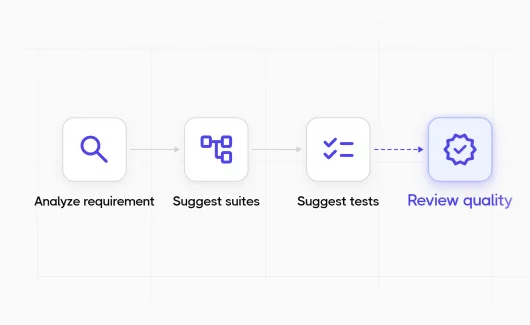
- Generate test cases from requirements automatically.
- Suggest test scenarios based on user stories.
- Identify gaps in test coverage.
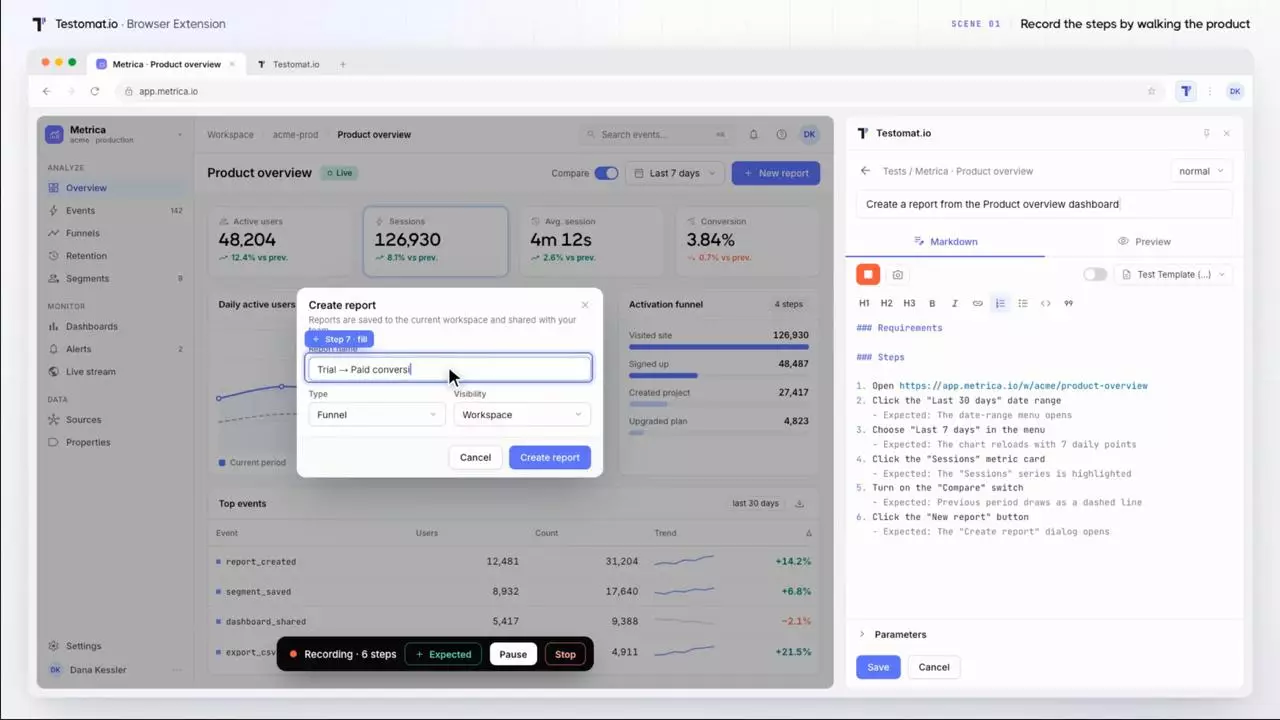
- Create detailed test steps and expected results.
This saves hours of manual test case creation time. QA teams using AI features report 40-60% faster test case development.
Native automation integration
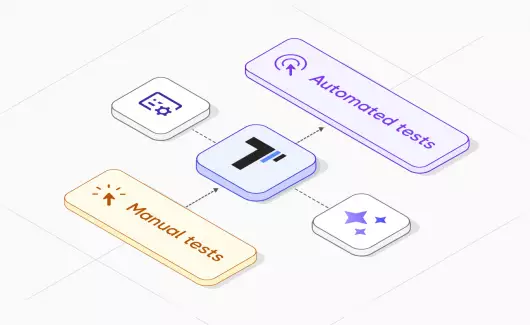
Testomat.io connects natively with Playwright, Cypress, Selenium, WebdriverIO , and other automation frameworks. Results from automated tests sync automatically into the test management platform. You can:
- Track both manual and automated tests in one place.
- See which test cases have automation coverage.
- Run automated tests from CI/CD and view results in Testomat.io.
- Link manual test cases to automation code.
This unified view of manual and automated testing doesn’t require complex setup or maintenance.
Deep Jira integration
Testomat.io provides bidirectional Jira integration that:
- Links test cases to Jira issues automatically.
- Shows test execution status directly in Jira.
- Updates when requirements change.
- Provides full traceability between requirements and tests.
The integration feels native rather than bolted on, similar to Qase but more complete.
Better collaboration features
Testomat.io supports real-time collaboration where team members can:
- Comment on test cases.
- Assign test runs to specific testers.
- Get email notifications for test assignments.
- Track testing progress on shared dashboards.
- Collaborate across dev and QA teams in one place.
Unlimited free users
Like Qase, Testomat.io provides unlimited read-only access for stakeholders. Project managers, executives, and other team members can view testing progress and test results without consuming licenses.
Flexible test organization
Organize test cases into logical groups that match your workflow. Compose test plans from any combination of test suites. Tag tests for easy filtering. The system adapts to your process rather than forcing you into rigid structures.
Detailed reporting
Generate meaningful reports on:
- Test coverage by feature or requirement.
- Execution status across test runs.
- Historical time data for test execution.
- Defect trends and quality metrics.
- Automation coverage progress.
Dashboards update in real-time, so you get instant visibility into software testing efforts.
Migration support
Moving from TestRail or Qase to Testomat.io is straightforward. Migration tools import existing test cases, preserving test suites, custom fields, and organizational structure. TestRail users specifically have access to automated migration scripts.
Making the decision
When comparing TestRail vs Qase:
Choose TestRail if:
- You need on-premises installation.
- Your team prefers traditional test management approaches.
- Budget isn’t a primary concern.
- You primarily do manual testing.
Choose Qase if:
- You want modern UX at reasonable per-user pricing.
- Requirements traceability is important.
- You need stakeholder visibility (free read-only seats).
- Cloud-based tools work for your organization.
Choose Testomat.io if:
- You want the most affordable option (team-based pricing) AI-assisted test case generation appeals to you.
- Strong automation integration is critical.
- You need deep Jira connectivity.
- Your team is growing and per-user pricing concerns you.
- You want modern features without premium pricing.
For most teams in 2026, Testomat.io provides the best combination of features, pricing, and modern capabilities. The AI-powered test generation alone saves enough time to justify the platform, and the team-based pricing makes it accessible regardless of team size.
Conclusion
Both Qase and TestRail offer solid test case management capabilities. Qase is a better value than TestRail with more modern features, better integrations, and lower per-user pricing. For teams deciding between these two platforms specifically, Qase is the stronger choice unless you require on-premises installation. However, Testomat.io outperforms both platforms by offering:
AI-powered test case generation Native automation framework integration Deep Jira connectivity Modern interface with excellent user experience Unlimited stakeholder access
Ready to see the difference? Try Testomat.io free and compare it directly to your current platform. Import a small test suite, explore AI test generation, and evaluate whether the modern approach to test management fits your team better than traditional tools like TestRail or Qase.