



According to the Quality Transformation Report, poor software quality costs them over $1 million annually. In the U.S., 45% of businesses report losses above $5 million a year. The financial impact keeps growing. Technical debt alone reached 1.52 trillion dollars.
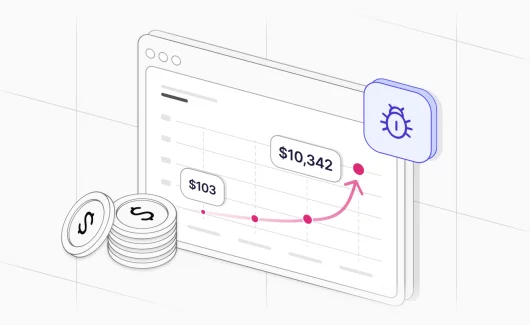
These are not abstract numbers. Every software bug has a real cost. The cost to fix a defect multiplies as code progresses through the SDLC. A bug found during design costs 100 dollars to fix. The same bug found in production costs 10,000 dollars. This 100x difference destroys budgets and delays deployments.
What is the true cost of a software bug?
Software errors cost businesses far more than the time developers spend fixing bugs. The real cost includes downtime, lost revenue, damaged reputation, and wasted developer time on firefighting bugs instead of building new features. Gartner estimates average downtime costs $9000 per minute .
- For large e-commerce sites, these numbers explode. Amazon loses around 200,000 dollars per minute during peak traffic outages. A 13-minute outage cost them 2.6 million dollars.
- The gaming industry faces similar pain. Cyberpunk 2077’s buggy launch forced CD Projekt Red to issue mass refunds and damage control costing over 50 million dollars in total. TSB Bank’s botched system migration in 2018 locked 1.9 million customers out of their accounts.
These software failures were avoidable with proper testing and quality assurance.
How bugs grow exponentially through the development cycle?
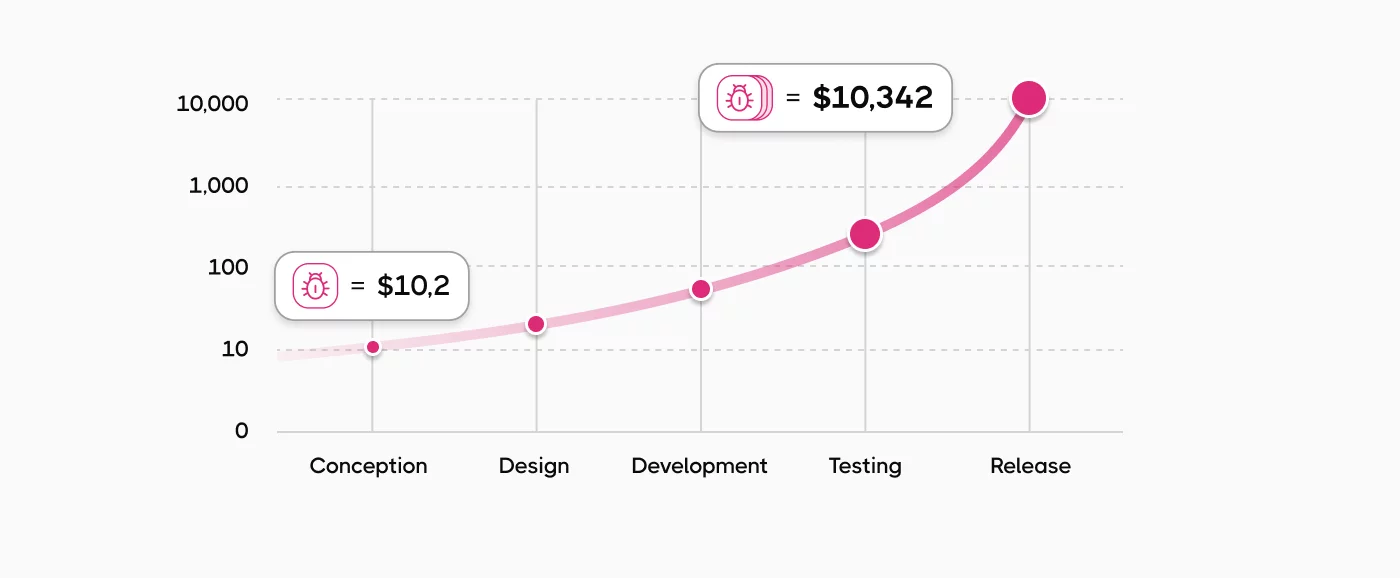
The cost of a software bug grows at each SDLC phase. Data from IBM’s Systems Sciences Institute shows clear patterns:
| Phase | Cost Impact | Why Costs Increase | Operational Impact |
| Design Phase | Baseline (1x) | Bugs are caught early before code is written | No downstream impact; minimal disruption |
| Developers fix issues while logic is fresh | Changes require minimal rework | ||
| Architecture decisions are still flexible | Fast resolution with low effort | ||
| Implementation Phase | ~6x Design Cost | Code has spread across multiple modules | Refactoring affects several components |
| Multiple developers work in the same areas | Coordination overhead increases | ||
| Integration complexity emerges | Cross-team dependencies slow fixes | ||
| Testing Phase | ~15x Design Cost | QA teams must reproduce and document issues | Significant time spent validating defects |
| Developers must context-switch from new work | Productivity drops due to interruptions | ||
| Regression testing scope expands | Higher verification effort before release | ||
| After Deployment | ~100x Design Cost | Live users encounter broken functionality | Customer frustration and churn risk |
| Emergency hotfixes required | Operational disruption and firefighting | ||
| Brand and trust impact | Reputation damage amplifies financial loss |
This exponential growth explains why early bug detection matters. Finding and fixing defects during coding saves orders of magnitude compared to fixing bugs discovered after deployment.
What are the hidden costs beyond direct fixing expenses?
The visible cost to fix bugs represents a fraction of total expenses. Hidden costs include:
| Impact Area | Key Factors | Operational Effect | Strategic Consequence |
| Developer Productivity Loss | Developers spend 35%–50% of time debugging | Reduced feature development velocity | Slower product innovation |
| Context switching from new features to bug fixes | Cognitive load increases, efficiency drops | Burnout risk increases | |
| Time spent reproducing issues locally | Delayed resolution cycles | Extended release timelines | |
| Documentation and communication overhead | More coordination required across teams | Higher engineering costs | |
| Quality Assurance Impact | Regression testing after each fix | Expands testing cycles | Longer validation phases |
| Test plan updates | Continuous maintenance effort | Process complexity increases | |
| Environment setup and maintenance | Infrastructure overhead grows | Higher operational cost | |
| Coordination with development teams | Dependency bottlenecks | Slower defect turnaround | |
| Business Disruption | Delayed feature releases | Product roadmap shifts | Competitive disadvantage |
| Missed market opportunities | Reduced revenue potential | Market share erosion | |
| Customer support costs | Increased operational burden | Lower profit margins | |
| Emergency response coordination | Crisis management overhead | Leadership distraction | |
| Long-Term Consequences | Technical debt accumulation | Future changes become harder | Reduced scalability |
| Codebase complexity growth | Onboarding becomes slower | Innovation slows down | |
| Team morale degradation | Engagement declines | Higher attrition risk | |
| Customer trust erosion | Brand credibility weakens | Long-term revenue impact |
The CISQ report identifies technical debt as the biggest obstacle to making code changes. Quick fixes and rushed coding create snowball effects making software increasingly expensive to maintain.
Common sources of costly bugs
Software defects enter codebases through predictable patterns:
- Requirements issues: Unclear specifications, changing requirements mid-development, misunderstood business needs, missing edge cases
- Design problems: Architecture flaws, scalability issues, security vulnerabilities, integration challenges
- Coding errors: Logic mistakes, memory leaks, race conditions, null pointer exceptions
- Testing gaps: Insufficient test coverage, missing integration tests, inadequate performance testing, skipped regression tests
- Deployment failures: Configuration errors, environment differences, migration issues, rollback problems
Software vulnerabilities create special risks. The recent Statista report shows cybercrime costs reaching 10.29 trillion dollars globally. A single vulnerability affecting open source components spreads across thousands of applications.
The financial impact of bugs at different stages
Real examples show how timing affects costs:
- A bug found during the design stage is quite different compared to a bug that is found during the later stages. This happens when a well-developed code has an issue that is pointed out by a developer who corrects the issue in less than two hours. This would take about 200 dollars of developer time and the effect it has is zero since this is fixed before going live.
- The situation is more disruptive and costly when a bug is discovered in the course of testing. In that case, QA finds a faulty feature, a developer spends four hours debugging the feature, and QA spends another three hours recreation. The overall price increases approximately to $1,400, and the launch is postponed by two days.
- The most expensive case is a production bug. A critical problem occurs to 10,000 users, which leads to an emergency solution and then eight hours of QA validation and two hours of deployment. Customer support will be required to attend to 500 tickets. The direct cost alone is no less than 25000 dollars and the overall effects consist of destroyed user confidence and revenue loss.
These numbers exclude opportunity costs. While teams firefight production bugs, they don’t build features that generate revenue.
Proactive testing strategies that reduce costs
Organizations slash bug costs through systematic approaches:
- Shift-left testing implies the validation of requirements, architecture and edge cases prior to the start of development. Clearly defined acceptance criteria, preliminary test case design, and peer reviews are used in order to eliminate logical fault even before it can result in costly on-the-job problems.
- Critical path automation of tests guarantees the authentication paths, business logic, and major user paths are tested in each deployment. The regressions are quickly detected (within a few minutes) through fast feedback loops, which radically reduces the cost of the fix.
- One can use continuous integration with automated tests so that each code change can cause a build, unit tests, and integration tests to be run automatically. This eliminates the accumulation of defects and minimizes massive releases which often bring undiscovered defects.
- Risk-based testing puts the vital issues to the business first. Areas with high impact, such as payments, data security, core workflows are better covered, whereas low risk features are tested in proportion. This makes the testing cost-effective without wasting resources.
- The test data management and stable environment can save time wastage on recreating issues. Bugs can be easily spotted and fixed in a short period because of reliable staging environments and regular datasets.
- There is also an additional proactive level of observability and monitoring in production. The performance monitoring, logging and real-time alerts ensure that anomalies are noticed early before they develop into a magnitude and cost that cannot be easily handled.
Test management platforms organize these efforts. Tools like Testomat.io centralize test cases, track execution, and provide visibility into coverage. Teams see which areas have adequate testing and which need attention.
How Testomat.io helps control software quality costs
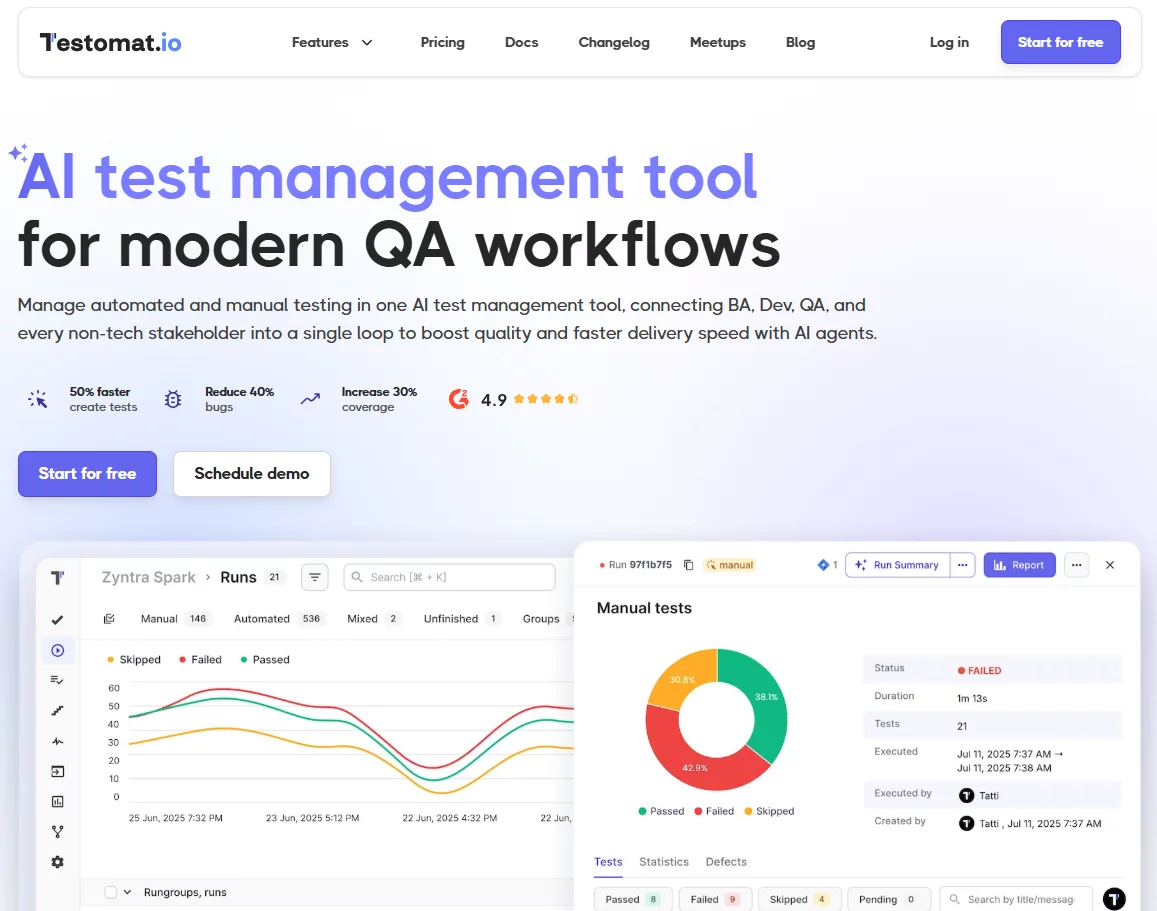
Testomat.io addresses the core challenge: catching bugs early in the development cycle where fixing defects costs less.
- ✅ Unified test management management provides organization and visibility to quality activities by putting all test cases in one superstructure.
- ✅ Automated test integration connects test management with the engineering workflow. Tests are imported directly from the codebase, synchronized with testing frameworks, and executed through CI/CD pipelines.
- ✅ Efficient execution ensures testing stays organized and scalable. Teams put tests in test plans, run them in various environments, take snapshots of the results and create easy to understand reports that do not require the stakeholders to sift through technical documentation.
- ✅ Analytics and insights transform raw results into actionable intelligence. The teams are able to identify flaky tests, track their automation coverage increase, examine the execution patterns over time, and quantify the defect density to learn about product quality and stability in general.
- ✅ Team collaboration keeps everyone aligned. It is possible to assign tests to particular members of the team, discuss them directly on the platform, also in version history, and integrate them with other tools, such as Jira and Slack, to guarantee a smooth development, QA, and product team communication.
The platform helps development teams and QA teams work together efficiently. Developers see test status without leaving their workflow. Testers execute tests without complex setup. Managers track quality metrics without interrupting teams.
The bottom line on software defect costs
Software bugs cost the U.S. economy 2.41 trillion dollars in 2022. Technical debt reached 1.52 trillion dollars. These massive numbers result from organizations not catching bugs early enough.
The cost of fixing a bug grows 100x from design to production. A 100 dollar fix during coding becomes a 10,000 dollar fix after deployment. Multiply this across thousands of bugs and costs explode.
Test management platforms like Testomat.io help control these costs by organizing testing efforts, automating where appropriate, and providing visibility into quality status. Teams catch bugs during development when fixes cost less.
The choice is clear: invest in proper testing now or pay much more later through production bugs, downtime, and lost revenue. Organizations that build quality in from the start spend less, deliver faster, and satisfy customers better than those firefighting bugs after deployment.
Every dollar spent on comprehensive testing saves 5 to 10 dollars in avoided bug costs. The ROI on quality assurance is not theoretical. The numbers prove testing pays.