



BrowserStack is well-known. QA engineers have used it for years to run cross-browser testing, mobile application testing, and automated test runs against real devices. But it’s not the only option and for many teams, it’s not even the best one.
Costs climb fast. Enterprise pricing can feel steep for smaller teams. Some tools have stronger test management built in. Others beat BrowserStack on AI-powered features, parallel testing limits, or how cleanly they plug into your CI/CD pipeline.
This article covers five solid BrowserStack alternatives worth your time — starting with the one that has the strongest overall case.
Key Takeaways
- Testomat.io is the best BrowserStack alternative for teams that need full test management alongside execution, with AI test generation, BDD support, and deep Jira integration
- Sauce Labs is a strong pick for large enterprise teams already invested in Selenium infrastructure
- TestingBot keeps costs low and supports both live testing and automated testing without a heavy setup
- TestGrid is worth considering for teams who want on-prem deployment with device farms
- Most of these tools offer a free trial or free tier, no credit card needed to start
- Cross-browser testing, parallel testing, and mobile testing are table stakes now; the real differentiator is what surrounds test execution
Why Teams Start Looking for a BrowserStack Alternative
Switching from BrowserStack usually comes down to a few recurring frustrations:
- Price. BrowserStack’s pricing model charges per parallel session, and costs stack quickly once your team runs tests simultaneously across multiple browsers and devices. Teams doing serious test automation hit limits fast.
- Missing test management. BrowserStack provides testing infrastructure, real browsers, real devices, Android and iOS coverage, but it doesn’t manage your test cases, track requirements, or give you analytics on flaky tests. You still need a separate tool for that.
- Support gaps. Dedicated support and faster response times are gated behind higher plans, which frustrates QA engineers dealing with live incidents.
- AI features are limited. As testing teams look for intelligent test generation and self-healing capabilities, BrowserStack’s AI story is thinner than some newer alternatives.
None of this means BrowserStack is bad. For pure cross-browser and mobile device testing, it does the job. But if your testing needs have grown, these alternatives are worth looking at seriously.
1. Testomat.io
Best for: QA teams that need test management, automation support, and AI-powered features in one place
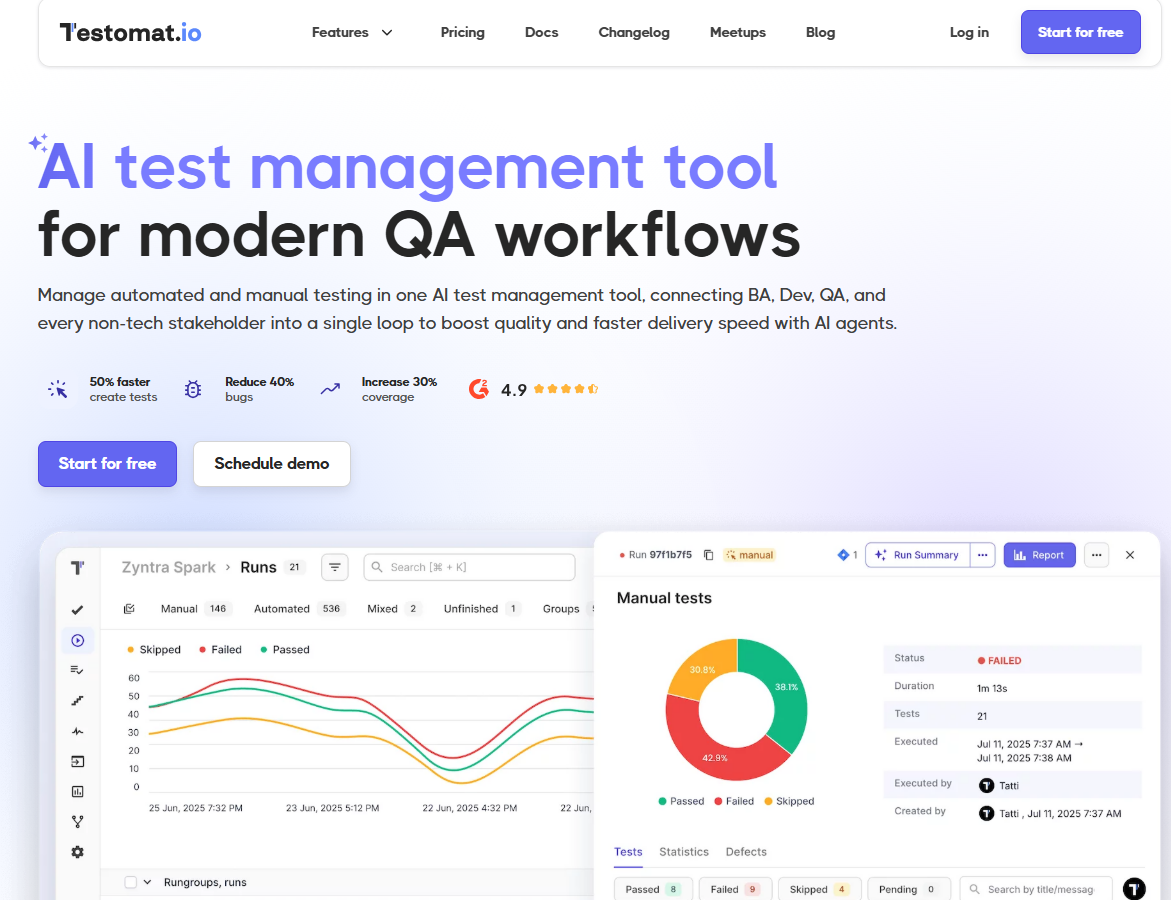
Testomat.io takes a different approach than most tools in this list. Where BrowserStack focuses on browser and device infrastructure, Testomat.io is a full test management system built around automation. It handles the entire testing process from writing test cases to executing runs to reporting results and wraps AI around all of it.
Over 500 companies use it, including Auth0, TaskRabbit, and Carhartt.
What makes it a superior alternative to BrowserStack:
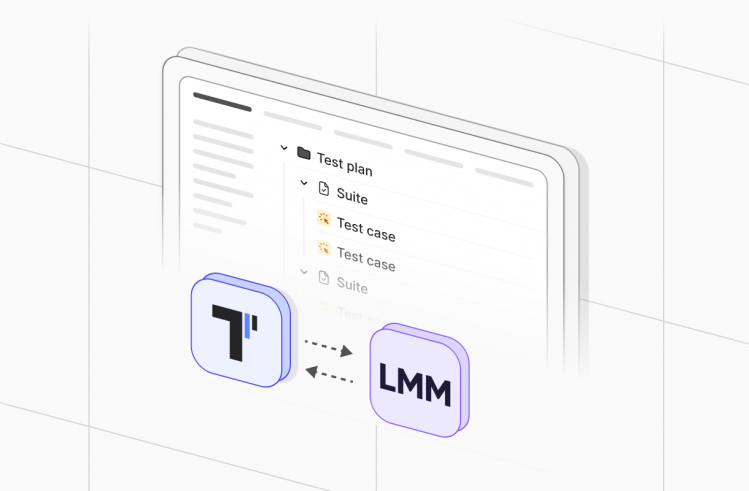
- AI test generation . On the Enterprise plan, Testomat.io generates test cases automatically from requirements, suggests improvements to existing tests, and detects potential issues before they reach production. BrowserStack doesn’t touch this layer. For teams trying to scale QA without scaling headcount, this matters.
- Unified test management + execution. You don’t need separate tools for managing test cases and running them. Testomat.io handles both. Test plans, multi-environment runs, mixed manual and automated runs, it’s all in one place.
- Cross-browser and cross-device support. Teams running tests across different browsers and devices can configure environments inside Testomat.io and track results by environment in real time.
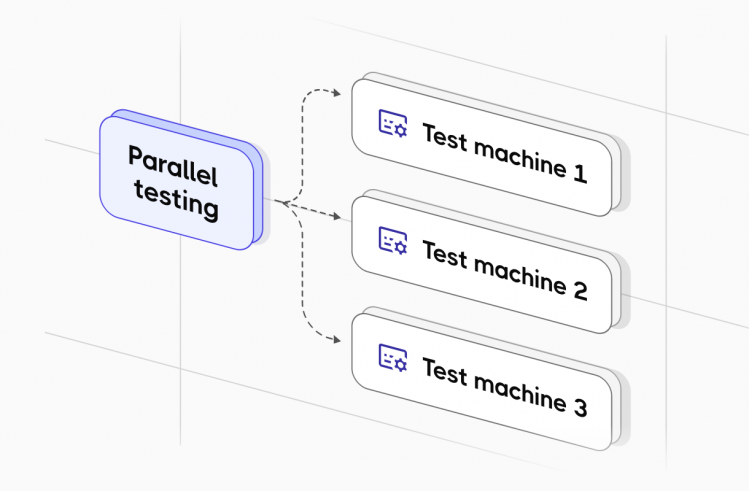
- Parallel testing at scale . Testomat.io supports parallel test execution and handles projects up to 100,000 tests. That’s enterprise-grade scale most teams won’t outgrow.
- Framework support. It works natively with Cypress, Playwright, Selenium, Jest, Mocha, WebdriverIO, Cucumber, CodeceptJS, TestCafe, and more. No extra setup for most frameworks.
- Advanced reporting. The analytics dashboard shows automation coverage, flaky test trends, slowest tests, ever-failing tests, and run status by environment. BrowserStack’s reporting is more basic.
- Jira integration . Bidirectional sync with Jira is one of Testomat.io’s strongest features. Changes in Jira appear in Testomat.io and vice versa. There’s also a dedicated Jira plugin for both classical and BDD tests.
- BDD support . A full Gherkin editor with auto-completion, Cucumber support out of the box, and living documentation that syncs with Confluence. Non-technical stakeholders can read and write scenarios without touching code.
- Self-healing tests and intelligent test suggestions (Enterprise) reduce maintenance burden as your test suite grows.
Testomat.io doesn’t have its own device farm the way BrowserStack does. But it integrates with your existing testing infrastructure and adds everything BrowserStack lacks, test management, AI, requirements tracking, and deep collaboration tools. For teams that need more than a testing platform and a list of real browsers, it’s a compelling case.
2. Sauce Labs
Best for: Enterprise teams with large Selenium test suites and strict compliance requirements
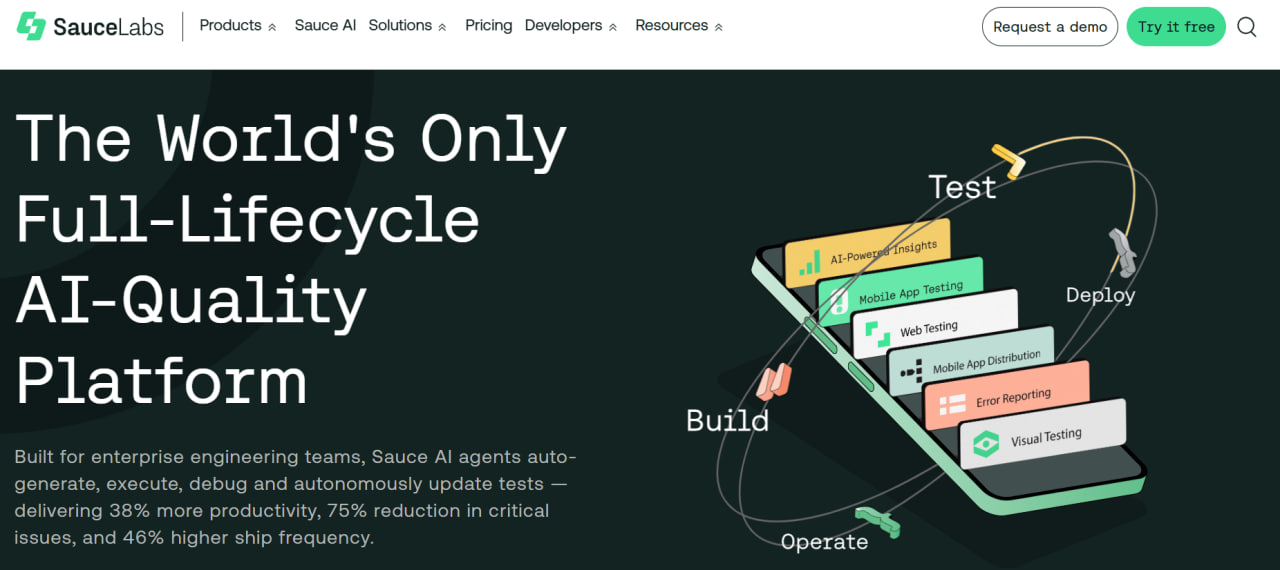
Sauce Labs is probably the most direct competitor to BrowserStack in terms of infrastructure. It offers access to thousands of real browsers, real mobile devices (Android and iOS), simulators, and emulators. If you’re running web testing and mobile testing at scale using Selenium or WebdriverIO, Sauce Labs is a serious option.
- Access to 3,000+ browser and device combinations
- Strong Selenium and Appium support
- Visual testing and visual regression capabilities
- Performance testing features built into the platform
- Sauce Connect for secure testing behind firewalls
- Error reporting and debugging tools including video capture, screenshots, and logs
Sauce Labs vs BrowserStack is a close call on infrastructure. The real gap is cost Sauce Labs tends to run more expensive, which can be a shock when you’re testing across many devices and browsers simultaneously.
There’s also no native test management, no BDD tools, and no AI features. Like BrowserStack, it’s infrastructure-only. You’ll still need something else to manage test cases and track coverage.
3. TestingBot
Best for: Teams looking for a cost-effective BrowserStack alternative with live testing and automation support
TestingBot is a smaller, leaner testing platform that handles cross-browser testing, mobile testing, and automated testing without the complexity or price tag of bigger players.
Standout Features
- Live testing and automated testing on real browsers
- Mobile testing on real devices and simulators
- Selenium, Playwright, and Cypress support
- Parallel testing across browsers and devices
- Visual regression testing
- Tunnel feature for testing local environments
- Screenshot and video capture for debugging
TestingBot’s testing capabilities cover web applications across desktop and mobile. It’s not going to out-feature BrowserStack on device count, but for teams that need reliable cross-browser coverage without overpaying, it does the job.
TestingBot offers a free tier with limited parallel sessions. Paid plans start lower than BrowserStack and Sauce Labs. It’s genuinely cost-effective for small to mid-sized QA teams.
4. TestGrid

Best for: Teams that need on-prem device testing or want to own their device farms
TestGrid targets enterprises that want control, specifically, teams that can’t send test data to a third-party cloud or need on-prem infrastructure for compliance reasons.
- Cloud and on-prem deployment options
- Access to real mobile devices for Android and iOS testing
- AI-powered test execution with self-healing capabilities
- Cross-browser testing across real browsers
- Parallel testing support
- Visual testing features
- CI/CD integration with GitHub, GitLab, and Jenkins
If switching from BrowserStack is driven by security or data residency requirements, TestGrid’s on-prem option is worth a look. It gives you device farms under your own infrastructure rather than relying on shared cloud resources.
The AI-powered self-healing feature is a nice touch, when your UI changes slightly, tests adapt rather than immediately failing. TestGrid offers a free trial. Paid plans are available for cloud and enterprise deployments.
5. LambdaTest
Best for: Teams that want broad browser coverage with AI-assisted testing features
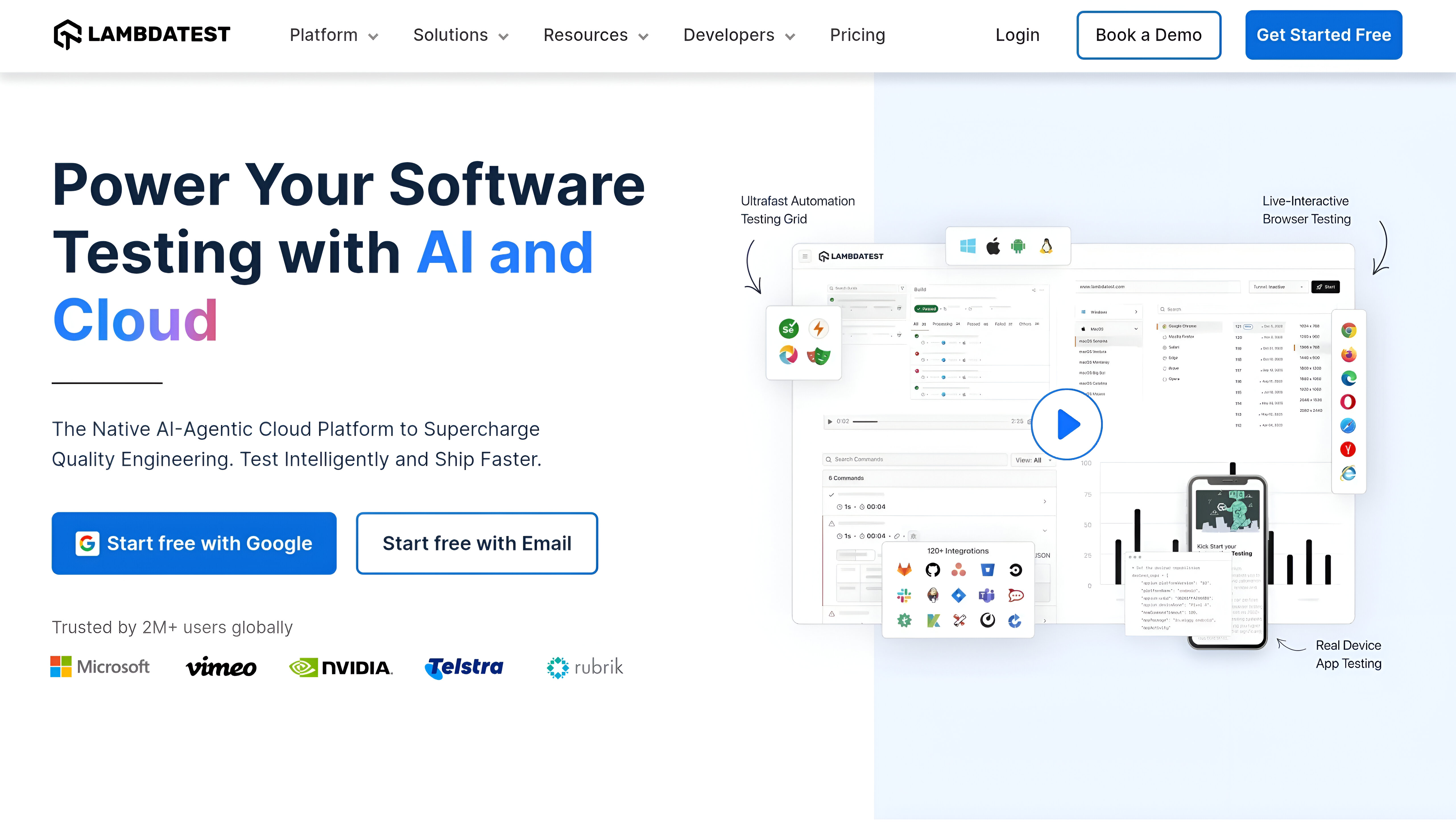
LambdaTest has grown quickly by offering a wide grid of browsers and devices with competitive pricing. It covers cross-browser testing, mobile app testing, and has added AI features to its platform.
- 3,000+ real browsers and devices
- Automated and live testing
- AI test generation capabilities (HyperExecute)
- Smart test execution with test orchestration
- Visual regression testing
- Cypress, Playwright, Selenium, and Appium support
- Parallel test execution at scale
- CI/CD integration with all major platforms
- Accessibility testing
LambdaTest is the most direct feature-for-feature BrowserStack competitor. The pricing is more aggressive, which is why many teams consider it when they’re switching from BrowserStack purely on cost grounds. Its AI features are also further along than BrowserStack’s.
The gap vs Testomat.io is the same one all infrastructure-only tools face: no test management, no requirements traceability, no BDD, and no way to connect your tests to business outcomes. A free tier is available. Paid plans start at competitive rates, with enterprise pricing available for large-scale needs.
Quick Comparison: All 5 Browserstack Alternatives
Before diving into each tool in detail, here’s where they all stand side by side. The table covers the dimensions that matter most when evaluating a BrowserStack alternative: AI capabilities, deployment flexibility, free access, test management, and BDD support. Infrastructure basics like cross-browser coverage and parallel testing are table stakes at this point, every tool here has them. The real differences show up in what surrounds test execution.
| Tool | Best For | AI Features | On-Prem | Free Tier | Test Management | BDD |
| Testomat.io | Full QA workflow | ✅ Advanced | ✅ Enterprise | ✅ Yes | ✅ Full | ✅ Yes |
| Sauce Labs | Enterprise Selenium | ❌ Minimal | ❌ | ❌ | ❌ | ❌ |
| TestingBot | Budget-friendly | ❌ Basic | ❌ | ✅ Limited | ❌ | ❌ |
| TestGrid | On-prem device testing | ✅ Self-healing | ✅ Yes | ✅ Trial | ❌ | ❌ |
| LambdaTest | Browser coverage | ✅ Growing | ❌ | ✅ Yes | ❌ | ❌ |
How to Choose the Right Tool
A few questions help narrow it down:
- Do you need test management alongside browser testing? If yes, Testomat.io is the clear answer. None of the other tools on this list handle test cases, requirements traceability, or BDD scenarios. Testomat.io does all of it while also supporting your automation framework.
- Is cost the main driver for switching from BrowserStack? TestingBot and LambdaTest both undercut BrowserStack on price for similar browser and device coverage.
- Do you have on-prem requirements? TestGrid and Testomat.io (Enterprise) both offer self-hosted options.
- Are you scaling a Selenium-heavy enterprise stack? Sauce Labs is the safest bet for that environment.
- Do you want AI in your testing process? Testomat.io (Enterprise) goes deepest here: AI test generation, AI agents, requirements management, and custom AI provider settings. LambdaTest is adding AI features too, though they’re narrower in scope.
Getting Started with Browserstack Alternitives
All five tools offer free trials or free tiers. The fastest way to evaluate any of them is to connect your existing test suite and see how results look in practice. For Testomat.io specifically:
- Sign up at Testomat.io — the 30-day trial starts automatically
- Create a project and import your existing tests (CSV, TestRail, Zephyr, qTest supported)
- Connect to your CI/CD pipeline (GitHub Actions, GitLab, Jenkins, Azure DevOps all work)
- Configure your integrations Jira, Slack, or Teams
- Run your first test suite and check the analytics dashboard
The free plan supports up to 2 users and 2 projects with no credit card required. If you’re a solo QA engineer or a small team testing the waters, that’s enough to form a real opinion.