




In Agile development, collaboration is the thing that holds quality together. It matters across every role in the development process, and it matters just as much when you bring customers in to understand what they actually wanted. Two practices push that collaboration in opposite directions across the timeline: shift left and shift right.
What is shift left and shift right testing?
Shift left and shift right testing are two complementary approaches to integrating testing into the software lifecycle. Shift left moves testing earlier, into requirements and development, to prevent defects. Shift right moves testing later, into production, to validate real user experience.
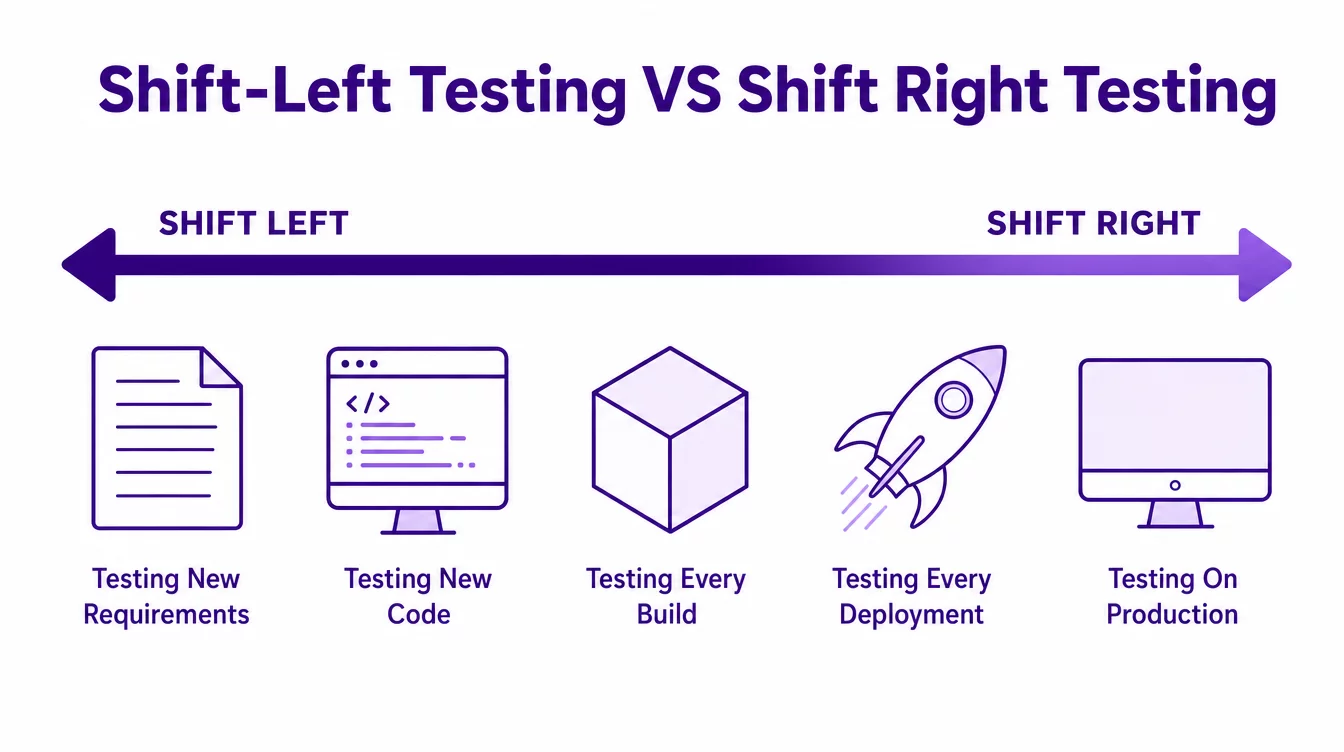
Used together, they cover the whole lifecycle. Shift left catches problems before release. Shift right learns from what happens after it. Most mature teams run both rather than choosing one.
What shift left testing means
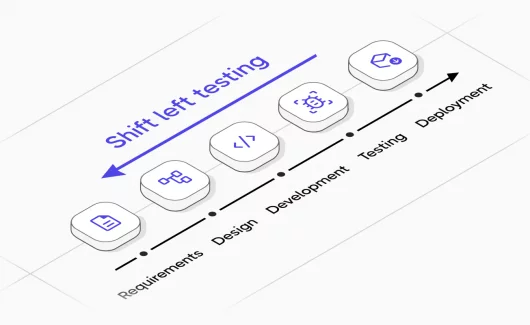
Shift left essentially means QA engineers begin testing right at the start of the development cycle, and testing continues throughout the whole SDLC.
The goal is to prevent defects and mitigate risks rather than deal with a load of bugs and critical issues after development finishes. It is a well-known fact that defects cost less to a project the earlier they are caught.
For developers, the benefit is getting things right the first time and being able to deliver on expectation and quality. In modern software testing, the shift left practice often encourages BDD test cases instead of classical test cases, which helps prevent defects before they reach code.
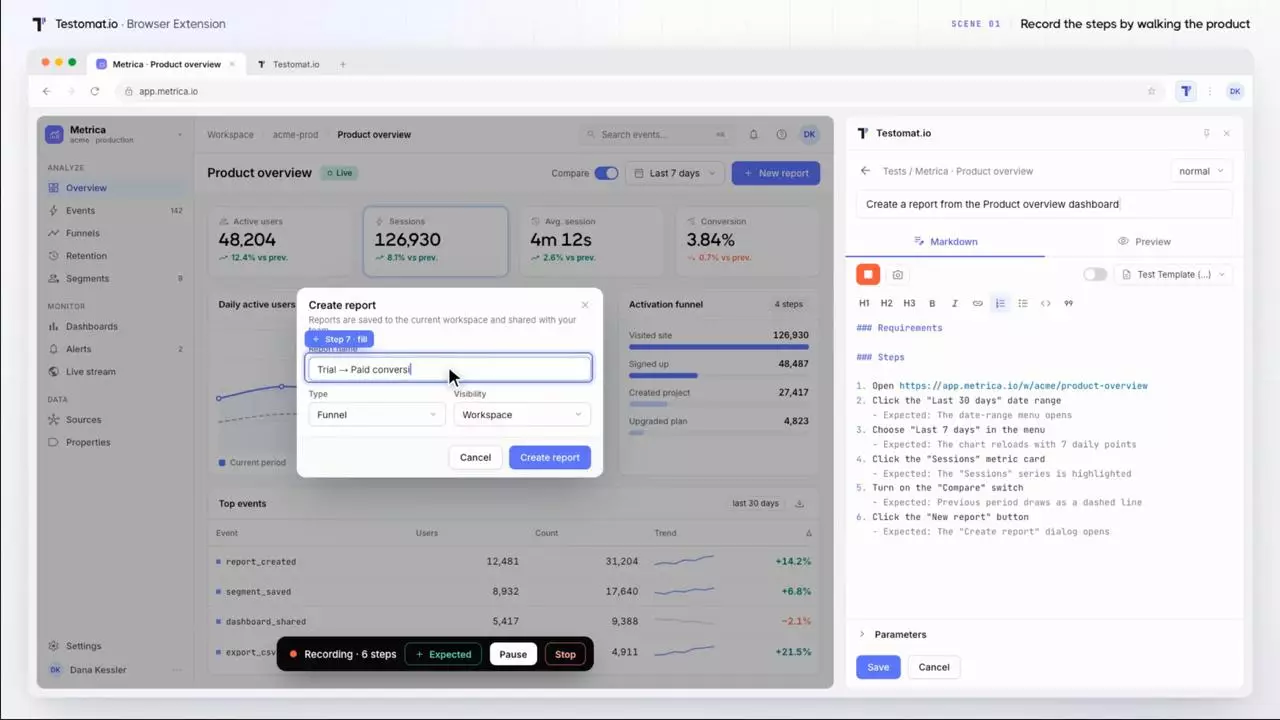
Testomat.io supports this approach in practice with:
- Autogenerated living BDD documentation
- Auto formatting in the BDD editor
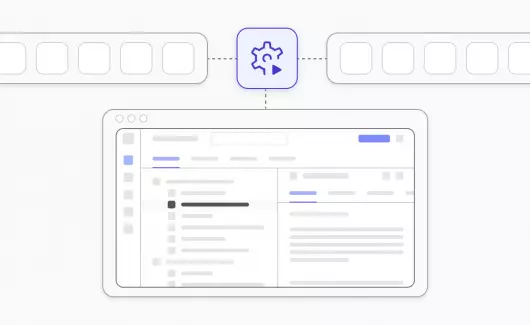
- A bidirectional Jira plugin
For a deeper look at moving testing earlier, see our shift left testing guide .
What shift right testing means
The shift right approach in DevOps means testing the software application at the right end of the timeline, in production. This practice lets testing move into the live environment and check functionality, performance, failure tolerance, and user experience through controlled experiments.
Testing in production uses real user behavior, which improves customer experience in a way no staging environment can fully replicate. Customer feedback gets gathered carefully, and all issues are then translated into technical and business requirements.
The result is software that stays flexible. Some features keep developing, others get removed or changed, based on what the team learned from real feedback.
Shift left vs shift right: the comparison
So how do shift left and shift right testing differ in practice? The table below lays out the shift left vs. shift right contrast across the factors that matter.
| Factor | Shift left | Shift right |
|---|---|---|
| When it happens | Requirements and development | Staging and production |
| Main goal | Prevent defects early | Validate real user experience |
| Typical activities | Requirements review, unit and integration tests, BDD | A/B tests, canary releases, monitoring, feature flags |
| Feedback source | Code, tests, acceptance criteria | Real users in production |
| Cost of fixing | Lowest, caught before release | Higher, but caught with real data |
| Risk focus | Building the thing right | Building the right thing |
| Tooling | CI/CD test runners, test management | Monitoring, observability, experimentation |
The shift left shift right pairing is not an either/or decision. Shift left testing and shift right testing answer different questions. Shift left asks “did we build it correctly?” Shift right asks “does it work for real users?” Run both and you cover the full lifecycle.
When to use each approach
The shift left vs shift right testing choice usually comes down to where your biggest risk sits.
- Lean on shift left when defects are escaping into late testing phases, rework is high, or requirements are often unclear.
- Lean on shift right when the app behaves well in tests but real users hit issues you didn’t predict, or you want to validate features with live traffic.
Most teams adopt shift left first because it has the bigger early payoff, then add shift right as their production monitoring and experimentation mature. The shift left and shift right testing combination is what gives you confidence before release and learning after it.
How Testomat.io supports both
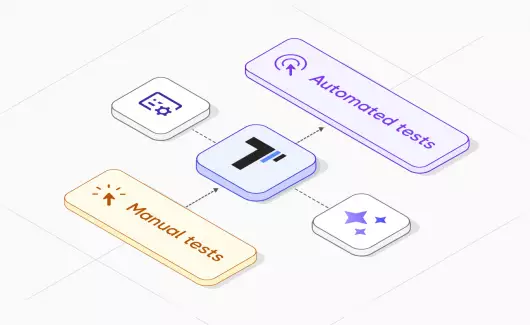
A test management platform ties the two halves together. Testomat.io connects requirements to test cases for the shift left side, links test runs to CI/CD pipelines so tests run automatically on every commit, and keeps analytics and heatmaps that show where coverage is strong and where production feedback should feed back into your test suite.
Each of these approaches has its own set of advantages. Implement shift right and shift left together with Testomat.io.
This article was first published on our LinkedIn product page. Follow the page to stay tuned for all our business news.