




What is shift left testing? Shift left testing is the practice of moving testing earlier in the software development cycle, so defects surface when they are cheap to fix instead of after code reaches production.
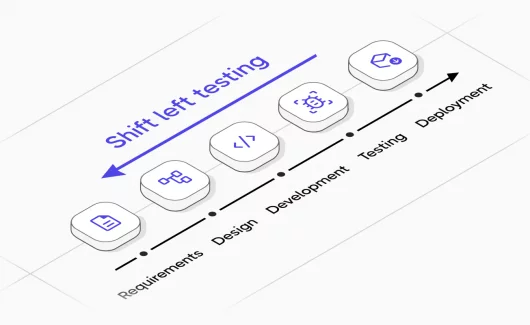
The shift left definition comes from picturing the SDLC as a timeline running left to right, with requirements on the left and production on the right. The shift left meaning is simple: move QA activity toward requirements and development rather than leaving it for the end. This guide covers the shift left testing strategy, the four stages, how to implement it, and the shift left testing benefits worth measuring.
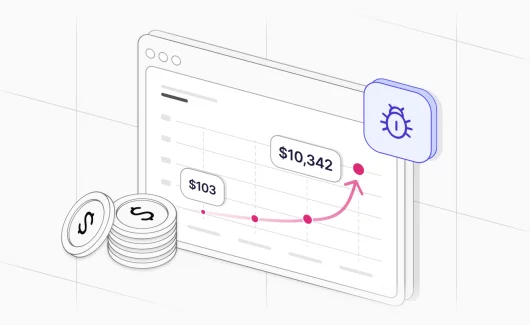
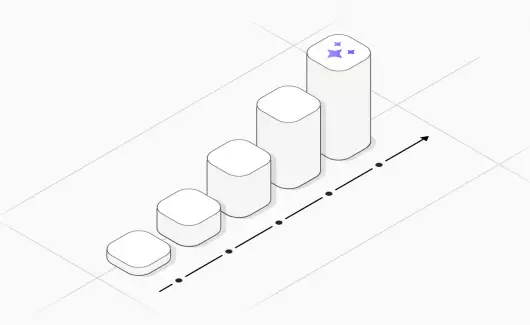
A bug found in production costs roughly 30 times more to fix than the same bug caught during development. That number has been cited since at least the 1980s, first by Barry Boehm in Software Engineering Economics, and while the exact multiplier varies by system and team, the direction hasn’t changed. The later you find a defect, the more expensive it is.
Shift left testing (also written shift-left testing) is the practice of moving testing earlier in the development cycle so defects surface when they’re cheap to fix, not after they’ve been baked into code that’s already been reviewed, merged, and deployed.
The name comes from visualizing the SDLC as a timeline running left to right: requirements on the left, production on the right. Shifting left means moving QA activity toward requirements and development rather than leaving it for the end.
What shift-left testing actually means
The phrase gets used loosely, so it’s worth being precise. The shift left testing approach is not just “test earlier.” It’s a change in when testing activity happens, who does it, and what gets tested at each stage.
Shift left is one half of a pair. For how it pairs with testing in production, see shift-left vs shift-right testing , or go deeper with this shift left testing deep dive . In a traditional model, QA starts after development is done. Developers code the feature, hand it off, and QA tests it. If bugs are found, they go back to the developer, get fixed, and the cycle repeats. Testing is a gate at the end.
In a shift-left model, testing activity starts before a line of code is written. QA engineers review requirements for ambiguity and testability. Acceptance criteria get defined before development begins. Unit tests and integration tests are written alongside the code, not after. By the time a feature reaches the dedicated QA phase, the obvious bugs are already gone.
That sounds simple. Implementing it changes how your team plans sprints, writes requirements, and defines “done.”
Why teams shift left
The math is straightforward. A defect in requirements costs almost nothing to fix, you change a document. A defect in design costs a little more, you redesign before building. A defect in code found during development costs hours. Found during integration testing, it costs days. Found in production, it costs money, reputation, and sometimes customers.
Teams that shift left find defects at the cheapest stage. The testing effort doesn’t decrease, it moves. And because developers get faster feedback, they write better code over time. Finding out your function doesn’t handle null inputs at code review is an annoying 15-minute fix. Finding out in production after it caused data corruption is a very different conversation.
There are secondary benefits too. Smoke testing and quick sanity checks run earlier catch environment problems before they block the whole team. QA engineers who review requirements catch scope ambiguity that would have caused rework. The process gets less chaotic toward release because most of the chaos was handled three weeks earlier.
The four stages of shift-left testing
1. Requirements testing
This is the earliest and most underused stage. Before development starts, QA engineers read the requirements and look for problems:
- Vague acceptance criteria that could be interpreted multiple ways
- Missing edge cases the product owner didn’t think through
- Requirements that contradict each other
- Features that can’t be tested as described
A requirement that says “the system should respond quickly” can’t be tested. A requirement that says “the API should respond in under 200ms for 99% of requests under normal load” can. Catching this difference before development starts costs one conversation. Catching it after the feature is built and deployed costs a lot more.
BDD test cases help here. Writing acceptance criteria in Given/When/Then format forces specificity. If you can’t write a testable Gherkin scenario for a requirement, the requirement isn’t ready.
2. Unit and component testing
Developers write unit tests alongside their code. Not after. Not in a separate sprint. Alongside.
This is the part most teams say they do and few teams actually do consistently. The pressure to deliver creates a pattern where unit tests get added “later,” and later often means never, or means they get written after the fact to cover code rather than to verify behavior.
TDD (test-driven development) is one approach: write the test first, then write the code that makes it pass. ATDD takes it further, starting from acceptance criteria. Both put testing inside development rather than after it. The ATDD vs TDD comparison is worth understanding if your team is deciding which approach fits your workflow.
3. Integration testing
When individual components are tested in isolation, you know each piece works. Integration testing checks that they work together: that the API contract your frontend expects matches what the backend actually returns, that your microservices communicate correctly, that data flows through the system as expected.
System integration testing belongs in the development phase, not after it. Running integration tests on every pull request, not just before release, is what makes this actually shift left rather than just appear earlier in the calendar.
4. Pre-release testing
Even in a shift-left model, you still need pre-release testing. The difference is what it covers. If unit testing, integration testing, and requirements review caught most defects, pre-release testing focuses on end-to-end scenarios, user acceptance testing , and anything that requires the full system running together.
This is where exploratory testing lives. Not scripted, not automated, a skilled tester using the application the way a real user would, looking for things automated tests won’t find.
How to implement shift-left testing
To implement shift left testing, follow five steps:
- Involve QA in sprint planning so testing input shapes the story.
- Define testable acceptance criteria before development starts.
- Run automated tests in CI/CD on every commit and pull request.
- Enforce quality gates that block merges when tests or coverage fail.
- Track requirements coverage so nothing reaches release untested.
The sections below break each one down.
Involve QA in sprint planning
QA engineers should be in the room when user stories are written, not handed a finished spec. They’re the people who think about what could go wrong. Use that early.
The Three Amigos practice formalizes this: business analyst, developer, and QA review each story before it’s added to the sprint. Each brings a different lens. By the time development starts, the story has been stress-tested from three directions.
Define acceptance criteria before development starts
A story without acceptance criteria isn’t ready to develop. Period. The acceptance criteria are what QA will test, they should be written before the developer writes a line of code, not extracted after the feature is built.
Clear acceptance criteria written the BDD way , Given/When/Then, makes the expected behavior explicit and gives the developer a concrete definition of done. It also means QA can start writing test cases while development is in progress rather than waiting for a handoff.
Connect testing to CI/CD
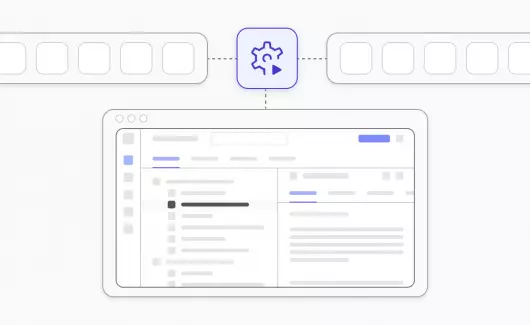
Shift-left testing without CI/CD integration runs tests later than you think. If tests only run when a developer manually triggers them or when a nightly build runs, they’re not actually early. Tests need to run on every commit, every pull request, automatically, which is what CI/CD execution enables.
Jenkins vs GitHub Actions is a practical choice depending on your stack. Either way, the pipeline should run unit tests on every commit and integration tests on every PR. A build that breaks tests shouldn’t be mergeable.
Use quality gates
Quality gates are automated checks that code must pass before moving forward in the pipeline. Test coverage below 70%? The build fails. More than X critical bugs open? The release is blocked. These aren’t bureaucratic speed bumps. They’re what turns “we should test earlier” from a principle into a constraint the process enforces.
Track requirements coverage
Shift-left testing catches defects early only if everything that needs to be tested is actually tested. Requirements traceability , mapping test cases to requirements, shows you where coverage exists and where it doesn’t.
The requirements traceability matrix (RTM) is the tool for this. A feature with no associated test cases isn’t done, regardless of whether the code works. Treat coverage gaps as open work items, not optional extras.
Shift-left testing and test automation
Manual testing alone can’t scale to shift-left requirements. If you’re running tests on every commit and every PR, those tests need to run in minutes, not hours. That means automation.
Test automation with Playwright is one approach for end-to-end testing that runs reliably in CI. The choice of framework matters less than having tests that run automatically and fail fast. A flaky test that sometimes fails is worse than no test, it teaches developers to ignore failures.
The practical division of automated testing in a shift-left model tends to follow the test pyramid: lots of fast unit tests at the bottom, fewer integration tests in the middle, a smaller number of end-to-end tests at the top. Automating unit and integration tests is usually straightforward. Automating end-to-end tests well is harder and worth investing in properly rather than quickly.
Shift-left and the role of QA engineers
Shift-left changes what QA engineers do, not whether you need them. A QA team that only executes manual test cases after development is structurally reactive, they find bugs after the fact. A QA team involved in requirements, acceptance criteria, and test strategy shapes quality before development runs.
The roles and responsibilities in a software testing team shift toward analysis and prevention. QA engineers become the people who define what “correct behavior” means, not just the people who verify it was achieved.
This requires different skills. Reviewing requirements for testability, writing Gherkin scenarios, collaborating with developers on test strategy, none of these are purely execution tasks. Teams that want QA engineers to shift left need to give them the access, the time, and the authority to do it.
Common mistakes
- Shifting left in name only. The most common failure: announcing a shift-left initiative, adding QA to sprint planning, and otherwise changing nothing. For shift-left to work, requirements need to be testable before development starts, tests need to run in CI automatically, and bugs found in development need to be fixed before new features are started. If none of those things happen, the initiative is a calendar change, not a process change.
- Treating unit tests as sufficient. Unit tests are fast and cheap and catch a specific class of problems well. They don’t catch integration failures, environment issues, or anything about how the application behaves as a whole. A codebase with 90% unit test coverage can still have critical end-to-end flows that break. System integration testing stays necessary.
- Skipping exploratory testing. Shifting left doesn’t mean automating everything and removing human testers. Automated tests check what they’re programmed to check. An experienced QA engineer doing exploratory testing finds things no automated test will find: usability problems, unexpected interactions, edge cases nobody thought to script. The two approaches complement each other.
- Measuring the wrong things. Test count and coverage percentage are easy to measure. Whether defects are being caught earlier, and at what cost, is harder. If your shift-left initiative produces a lot of test cases but defect rates in production don’t change, something isn’t working. Track where defects are found in the pipeline, not just how many tests exist.
Shift-left testing in Agile and Scrum
Shift-left fits naturally into agile workflows because both work in short cycles with continuous feedback. Scrum testing already assumes testing happens within the sprint, not after it. The Definition of Done should include acceptance criteria being met and relevant tests passing.
The sprint rhythm supports the shift-left model: requirements are reviewed at the start of the sprint, development and testing happen in parallel during the sprint, and a working, tested increment is delivered at the end. QA shouldn’t be a bottleneck at the end of each sprint because the testing started at the beginning.
Non-functional requirements, performance, security, accessibility, are the part most agile teams handle badly in shift-left. They get documented somewhere and then never tested until late in the project. Treating non-functional requirements as acceptance criteria for specific stories, not as global aspirations for the product, brings them into the shift-left model.
Metrics that tell you if shift-left is working
The shift-left model should produce measurable changes. If it doesn’t, something needs to be adjusted.
| Metric | What it shows |
|---|---|
| Defect detection rate by phase | Whether defects are being caught earlier in the cycle |
| Cost per defect | Whether finding bugs earlier is reducing the cost to fix them |
| Time from code commit to test feedback | Whether CI/CD tests are fast enough to be useful |
| Requirements defects found pre-development | Whether QA review of requirements is catching problems |
| Production defect rate | The bottom-line impact on software quality |
Software testing quality metrics are what make the shift-left model accountable. Without tracking where defects are found, you can’t know whether moving testing earlier is actually working.
Shift-left testing with Testomat.io
Managing test cases, requirements coverage, and CI/CD integration in a shift-left model requires a test management platform that supports the whole cycle, from requirements to execution to analytics.
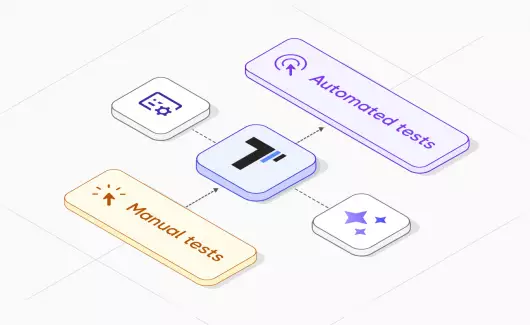
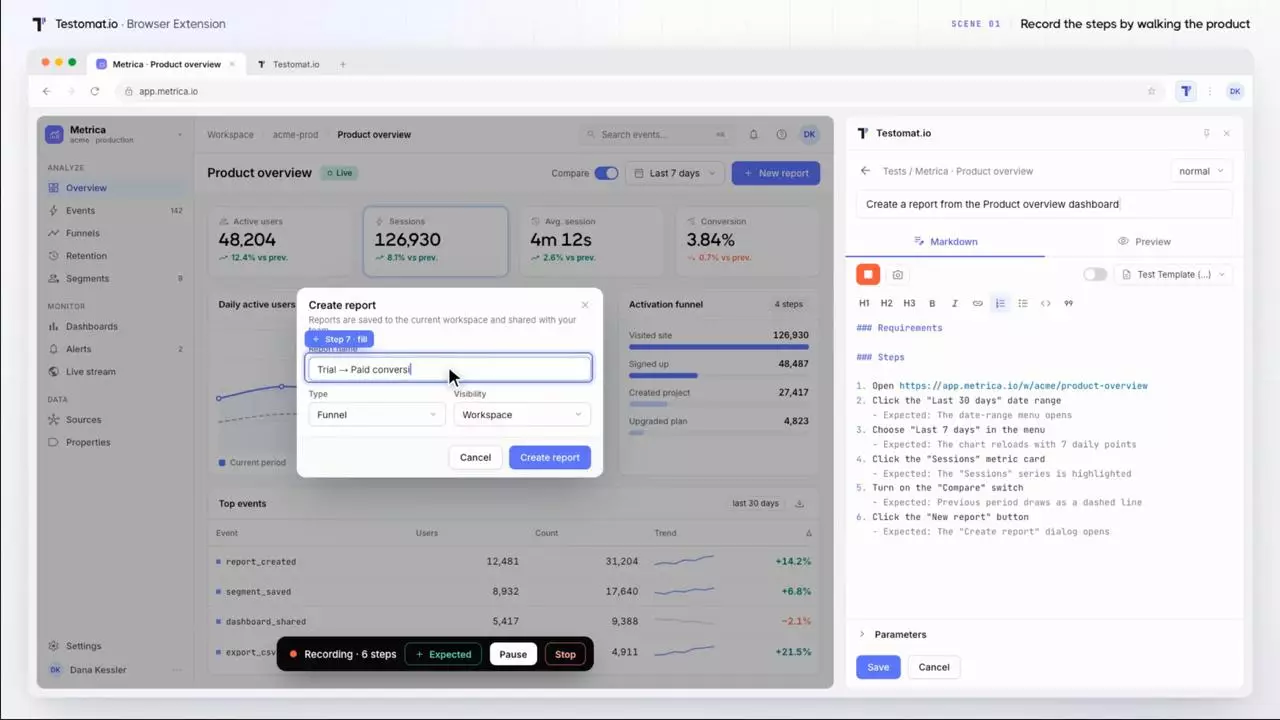
Testomat.io connects requirements to test cases so coverage gaps are visible before development finishes, not after. Test runs link to CI/CD pipelines so tests run automatically on every commit. Test quality metrics and heatmaps show which areas are covered and which aren’t. The platform supports both manual and automated tests in the same system so QA engineers have one place to manage everything.
Shift-left testing works best when the tools match the process. Tracking manual test cases in a spreadsheet while automated test results live in CI output and requirements sit in Jira creates the fragmentation that makes shift-left feel bureaucratic rather than useful. Connecting those things in one place is where test management earns its place in the workflow.
Shift-left testing is a process change, not a product purchase. The principle is simple: find bugs where they’re cheapest to fix. Implementing it requires QA involvement in requirements, test automation in CI, and a team culture where “testing” isn’t a phase at the end but a continuous activity throughout. That’s harder than it sounds, and more worth it than most teams realize until they’ve done it.
Want to connect requirements, test cases, and CI/CD in one place for shift-left? Try Testomat.io free . No credit card required.