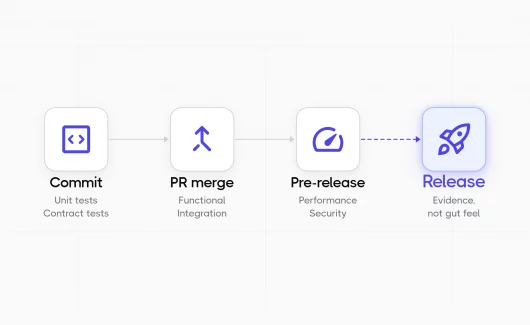





When your team deploys code every day, you trust your CI pipeline to catch the bugs. You run unit tests, integration tests, and code reviews. But there’s a scenario most security programs haven’t been ready for. Continuous deployment moves faster than your pentest schedule the moment your team starts to scale. In the article below, you’ll find out why annual pentests stop working in modern development workflows. Then you will discover how continuous penetration testing (CPT) closes the gap, and how the same thinking already changed QA processes.
What Is Continuous Penetration Testing?
Continuous penetration testing is an advanced security practice for running real-world attack simulations against your software every time it changes. While quarterly or annual pentest schedules have become outdated in modern software, continuous automated penetration testing combines two parts:
- Scanners that test the continuous attack surface.
- Human testers who handle the work, which scanners cannot do alone. For instance, business logic flaws and multi-step attack chains.
Findings get validated inside the development cycle. The priority of each finding focuses on actual risk instead of CVSS scores.
Why Annual Pentests Outdated?
Annual pentests were designed for a software world that does not exist anymore. Code shipped quarterly, vulnerabilities remained unexploited for months. A yearly security review could help mitigate these risks.
None of that works today. Elite engineering teams deploy on demand, often multiple times per day, according to DORA’s State of DevOps research. Mandiant’s report found that the mean time to exploit is approximately negative seven days, meaning exploitation begins on average a week before the vendor patch is publicly available. A traditional pentest cannot fix that math. The same case applies to functional testing, which is why shift-left testing replaced end-of-cycle QA in most modern engineering organizations.
Why Is Continuous Penetration Testing Important?
Modern attack techniques move faster than annual testing cycles. A snapshot of your security from six months back doesn’t help when the threat landscape changed last week. That’s the strategic case for continuous pen testing. It’s a shift in how an organization’s security program operates and maintains resilience against cyber threats. Let’s get a quick overview of why continuous penetration testing is important:
- Closed assessment window. The gap between annual tests is where most exposure builds up. Continuous testing closes that gap.
- Built for change. This matters most where the attack surface itself keeps changing: cloud services where deploys happen daily, and microservices that come and go.
- Live attack surface coverage. Pen testing services that operate continuously combine manual and automated testing across the live attack surface as it changes day to day.
- Real-time SOC integration. Results feed into your security operations center the moment they emerge.
- Findings feed remediation. Each finding lands in the development team’s tracker with severity and reproduction steps.
- Retests run automatically. Each fix gets verified by the same test, on the same surface, without manual scheduling.
- Risk drops faster. The gap between when a vulnerability is introduced and when it’s caught measures in days.
- Audit trail builds itself. Every test and fix becomes part of the evidence trail that compliance frameworks expect.
Unlike traditional annual penetration testing, the continuous approach makes security testing a routine part of how development teams deliver software solutions. While the upfront cost may be higher than that of traditional penetration testing, real-time security validation against the cost of a breach that lives undetected for months is worth it. For most teams running modern infrastructure, continuous testing helps keep security proactive and your development fast.
Who Needs Continuous Pentesting?
Continuous pentesting fits two profiles best: teams that release frequently, and teams under compliance pressure. Both reach the same conclusion through different routes.
Agile team
If your engineering organization releases at a high frequency, the gap between deployments and your last pentest grows with every sprint. You probably need continuous pentesting if:
- You deploy to production at least once a week.
- Your application surface changes meaningfully between scheduled pentests.
- New API endpoints or third-party integrations ship without a security review.
- Developers wait weeks or months for pentest findings to reach them.
Continuous testing in DevOps closes this gap for functional bugs. CPT closes the same gap for security ones.
Compliance-focused team
Auditors increasingly expect ongoing security testing, beyond a yearly snapshot. You probably need continuous pentesting if:
- You are working toward SOC 2, ISO 27001, HIPAA, or PCI DSS.
- Your customers ask for proof of continuous security assessment in their vendor reviews.
Your compliance program currently relies on annual reports, which quickly become outdated. - If you fit either profile, the real question is how to structure the process.
Traditional Vs Continuous: What’s The Difference?
The clearest way to see the gap is to compare how each approach handles:
| Traditional penetration testing | Continuous pentesting | |
| Frequency | Fixed annual schedule | Dynamic and ongoing, triggered by code changes |
| Method | Static manual snapshots | Continuous automated scanning with targeted human validation |
| Coverage | Audit of a fixed software version | Continuous discovery and testing of new endpoints as they deploy |
| Visibility | Results hidden until final reporting. | Real-time dashboards with continuous updates |
| Findings flow | PDF report handed to security, then to developers | Findings push straight into the developer tracker |
| Outcome | Static snapshot of your security posture | Live picture of risk as it actually exists today |
As you can see, the gap comes down to feedback speed. Traditional pentesting gives you one signal a year. Continuous pentesting tells you what’s broken right now.
How Does Continuous Penetration Testing Work?
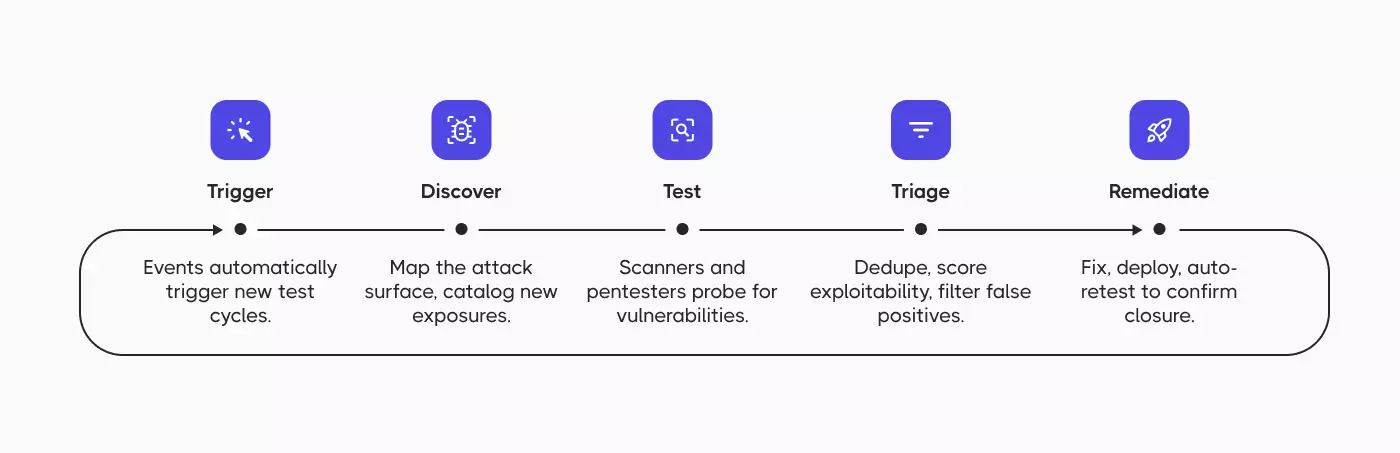
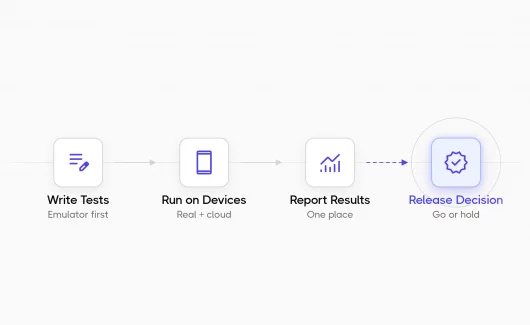
Continuous pentesting runs as a cycle. The same five steps repeat every time the application changes or new threat intelligence appears.
-
Trigger
A new build deploys. A new API endpoint goes live. A threat intelligence feed flags a fresh exploitation technique against your stack. Any of these starts a new test cycle. No one has to manually scope or schedule it.
-
Discover
Automated tools map the current attack surface, finding new endpoints, third-party dependencies, and exposed services. Human testers review the map and decide where to focus deeper effort. AI for quality assurance solves the same discovery problem on the functional side.
-
Test
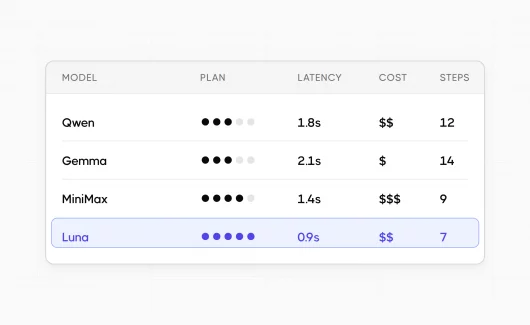
Scanners run continuously across the full surface and flag known vulnerability patterns. The newer AI-augmented scanners go further. They reason about business logic and chain multi-step attack paths in ways pattern-matching tools never could. The frontier moves fast.
Anthropic’s Project Glasswing gives select organizations early access to Claude Mythos Preview, restricted from public release due to cybersecurity concerns. Pentesters take focused engagements on the higher-risk areas: business logic, authentication, multi-step attack chains, and anything a scanner cannot reason about without additional context.
-
Triage
Findings get deduplicated and scored on real exploitability, with CVSS as one input among several. False positives get filtered before they ever reach a developer. What remains is a short list of actionable issues with reproduction steps.
-
Remediate
Findings move directly into the development team’s tracker, with severity and evidence attached. The fix path comes with each one. When the fix is deployed, the same test re-runs automatically to confirm the vulnerability is closed.
Then the cycle starts again with the next code change.
Continuous Penetration Testing Services And Providers
Most teams buy continuous pentesting as a service rather than build it in-house. CPT providers deliver the platform, the automation, and the human testers as one subscription, usually under the Penetration Testing as a Service model. This modern approach to cybersecurity testing moves away from the traditional annual testing model to a continuous, cloud-based delivery model.
The market reflects the shift. Analysts project the PTaaS market to grow at a CAGR above 20% through the rest of the decade, driven by the move away from point-in-time tests toward continuous validation, according to MarketsandMarkets . Regulatory mandates like PCI DSS and HIPAA push in the same direction, since they expect regular assessment rather than a yearly event.
When you compare CPT services, a few criteria separate the strong ones:
- Automated scanning plus human testing.
- CI/CD integration, so tests trigger on change instead of on a calendar.
- Clear reporting that a non-security stakeholder can read.
- Remediation guidance alongside the list of findings.
The right provider depends on your stack and your release pace. A team shipping daily needs tight pipeline integration. A regulated team needs compliance-ready reporting. That is why you should integrate the service into your existing workflow without restructuring your team to suit the service.
Why Continuous Pentesting Needs One Place For Results
A continuous program only works if findings reach the people who can fix them fast. This is where most continuous testing initiatives break, on the security and functional side alike.
The problem looks the same on both. A continuous pentest program produces dozens of findings a week. A functional test suite at scale produces hundreds. Without one place to triage and retest, both turn into noise the team ignores.
The solution also looks the same: a platform that routes the continuous flow of results into the team’s existing workflow. A good platform handles four things:
- Findings land in the developer tracker, with severity and reproduction steps.
- A retest fires automatically once the fix is deployed.
- Coverage is visible to engineering leadership, not only the QA or security team.
- The platform plugs into the existing CI/CD pipeline.
A modern test execution and tracking platform already does this on the functional side. For more on the pattern, see our guide to test management best practices.
How Testomat.io Collects Security Test Results
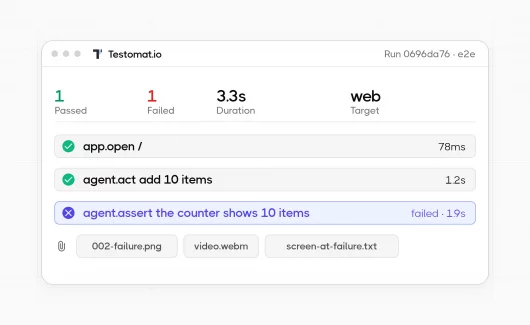
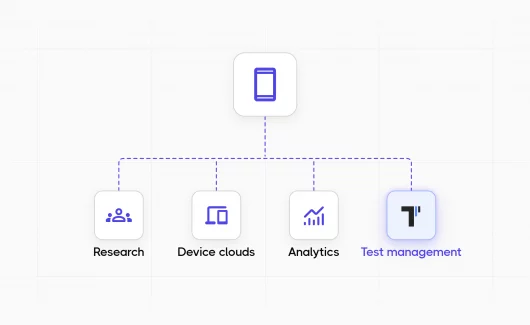
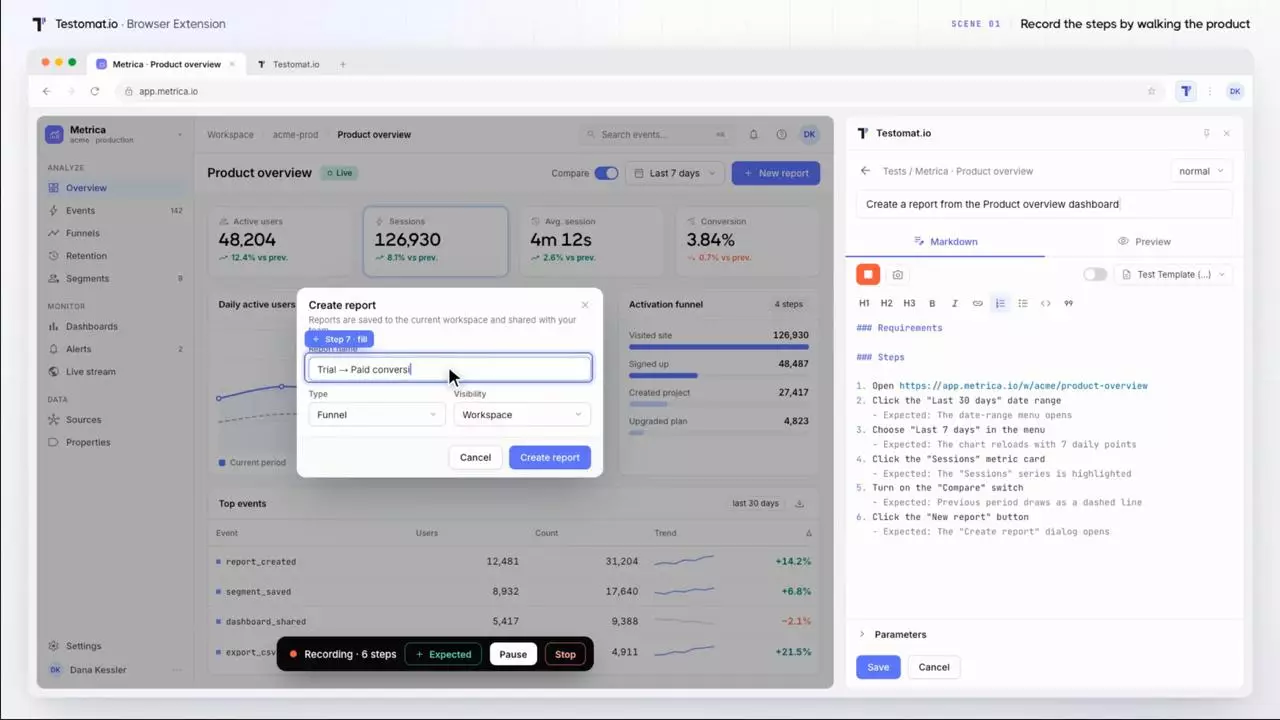
Testomat.io is a test management platform. It tracks and reports test results from your security tools alongside everything else. The pentesting itself happens upstream, in dedicated scanners or services. Here’s how the internal process works. Testomat.io loads JUnit XML reports from any test runner and creates tracked results automatically. Many security tools can emit JUnit XML. It’s the de facto standard for test result reporting.
The same operational principle applies to security results: collect them where your functional results already live.
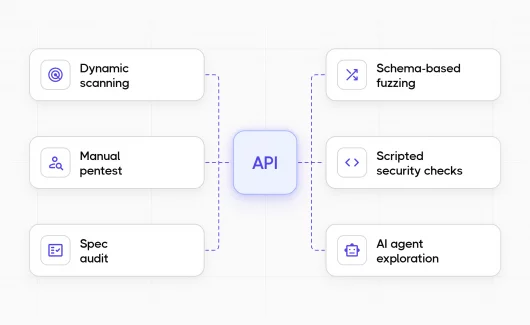
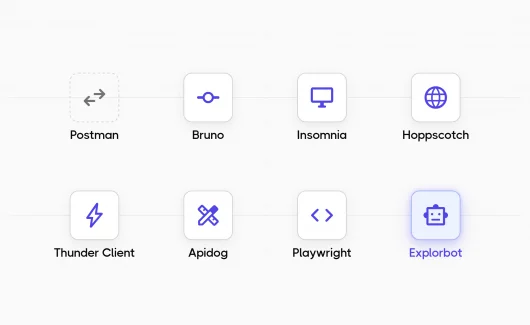
If you need active scanning on top of your existing pipeline, Explorbot is an AI agent that auto-scans a live app based on your goal, turns every flow it completes into a clean Playwright or CodeceptJS test. It runs on CI for hours unattended, around 30 to 50 meaningful tests an hour at roughly $1 of tokens. Each session takes a new path, so it catches regressions that your scripted tests miss. Its ApiBot brings the same autonomy to your APIs, generating API tests with different variations, methods, payloads. It chains request combinations a scripted suite would never try, and it’s trained to catch security breaches the way a real attacker would, probing endpoints with new pathways and inputs on every run.
Here is how results flow:
-
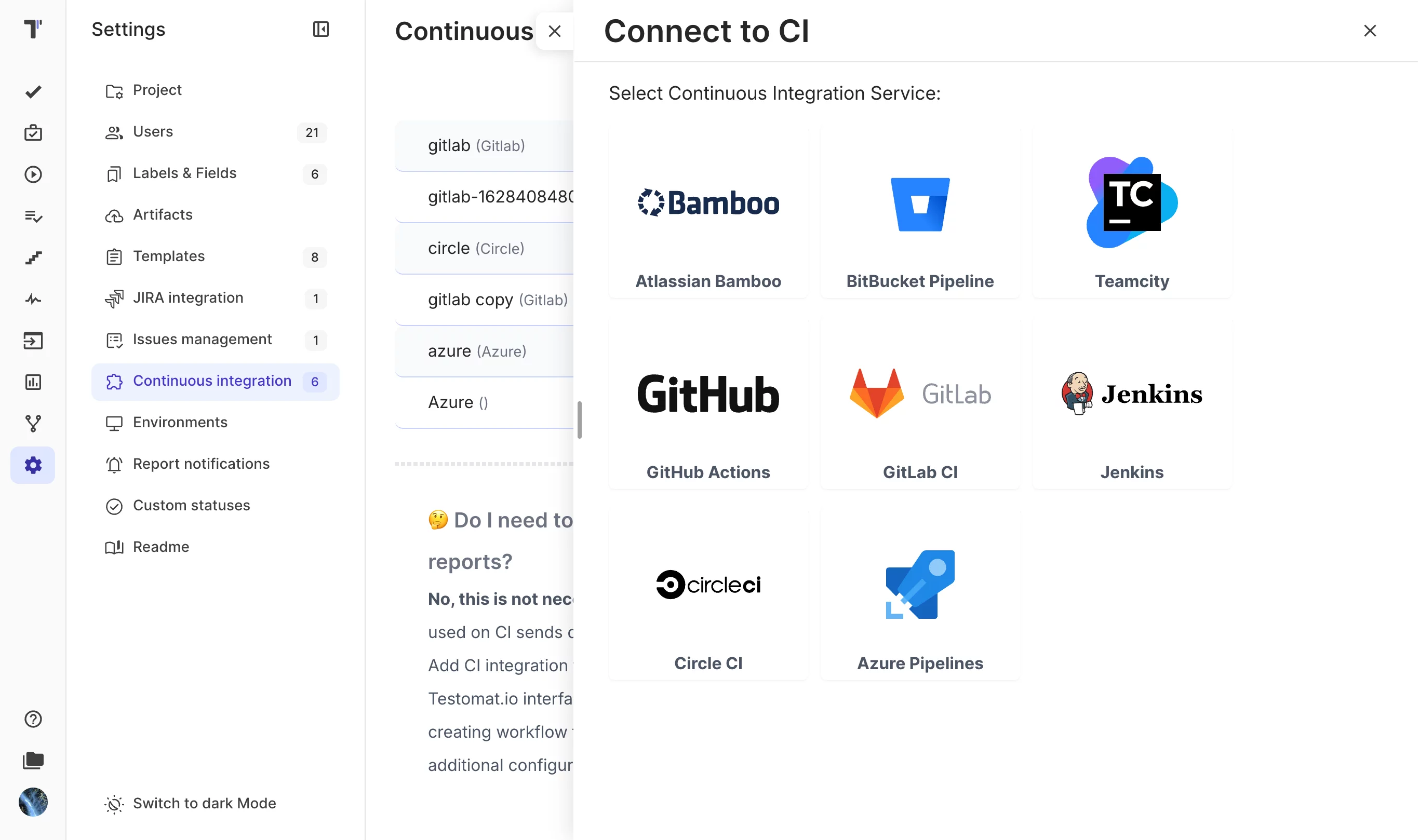
Configure CI Integration
You can start in the Testomat.io project settings and connect your project to your preferred Continuous Integration service, such as GitHub Actions, GitLab CI, Jenkins.
-
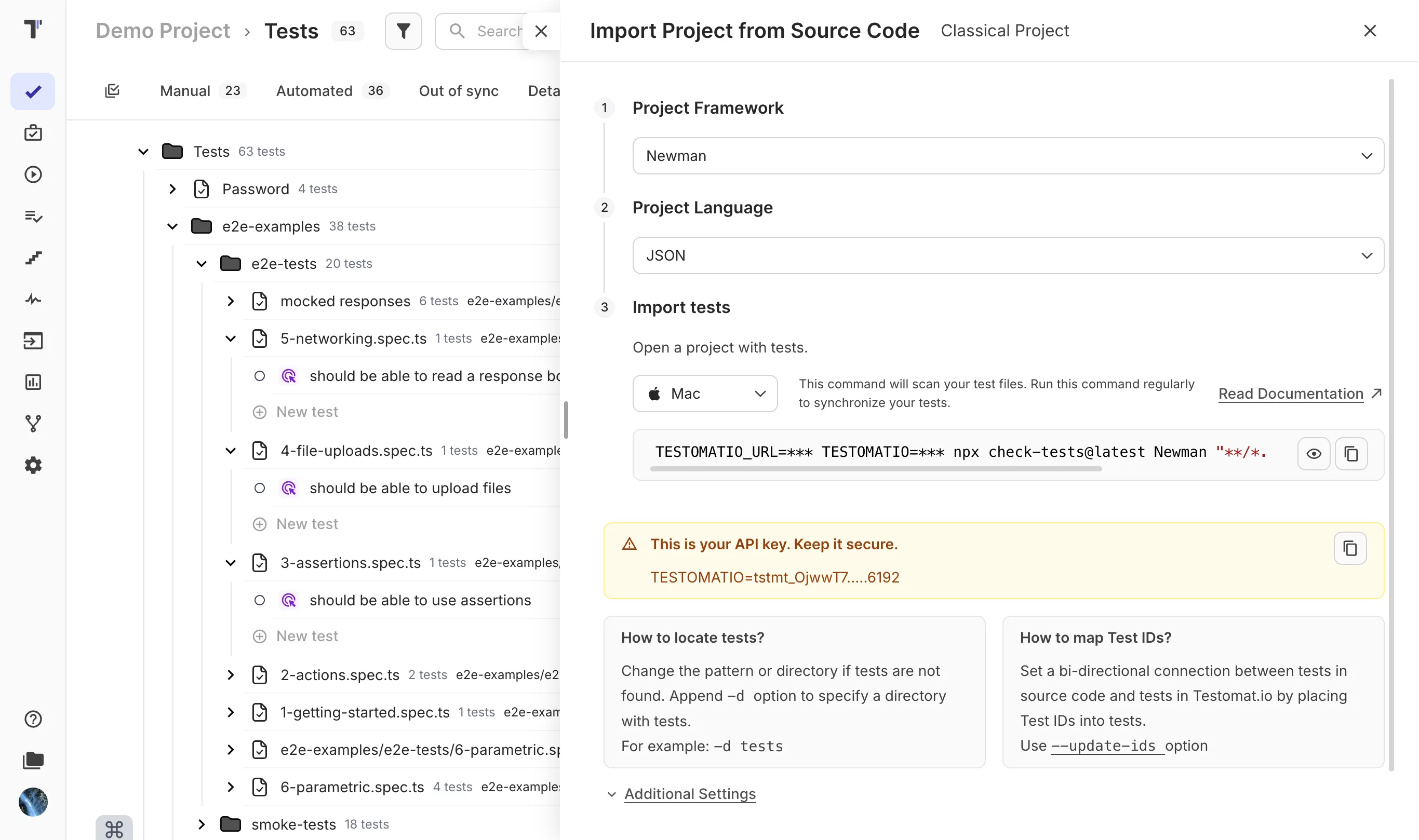
Import Security Tests
If you are using API-based security scanners, you can structure your findings in a compatible JSON format for Newman/Postman and import them into your project to establish a baseline for coverage. You can read about making rich reports with Postman and Newman in our guide.
-
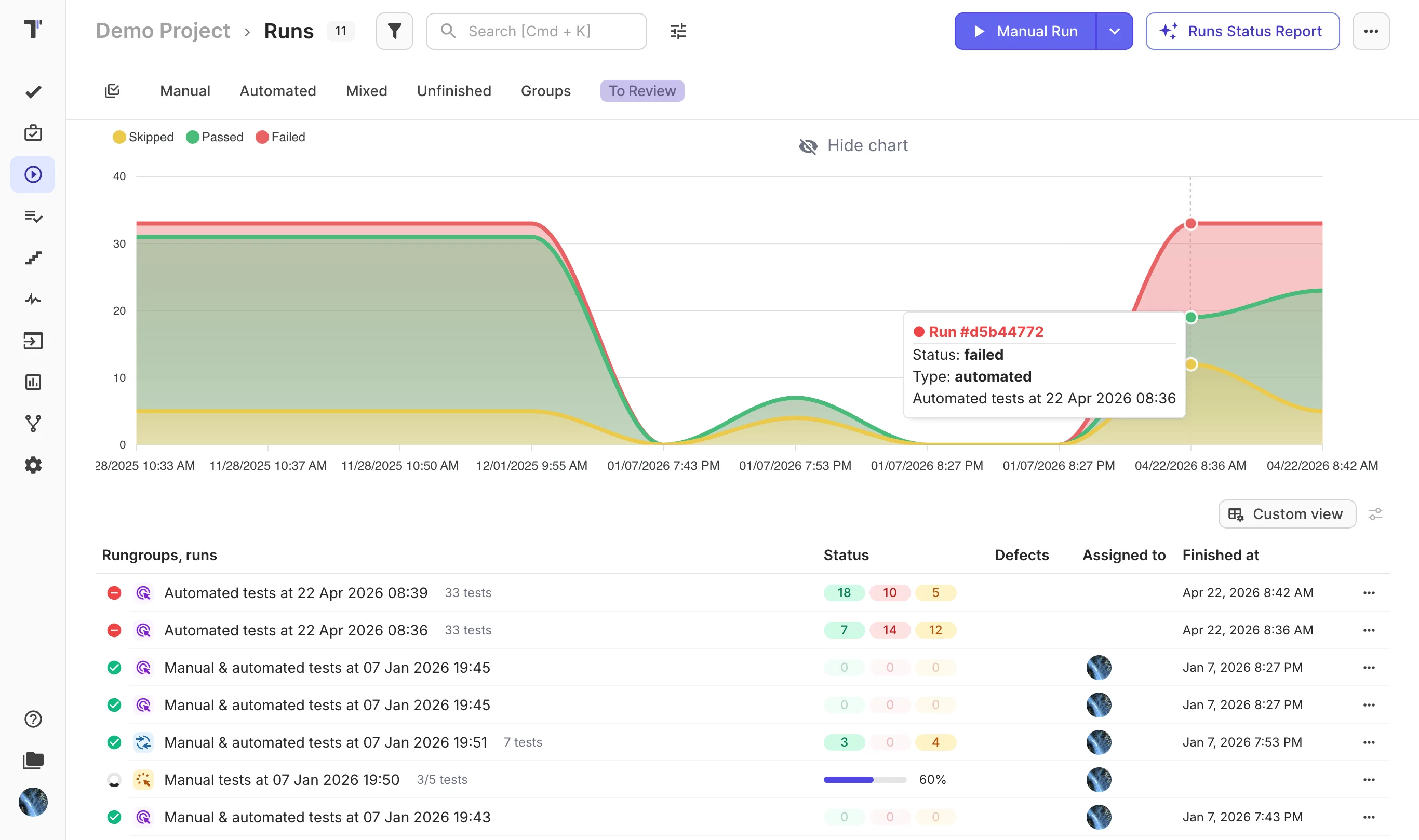
Monitor Automated Security Runs
When your scanner runs in your CI pipeline, it pushes results to Testomat.io. You can monitor the real-time status of these automated security runs alongside functional tests in the Runs view.
-
Analyze Results
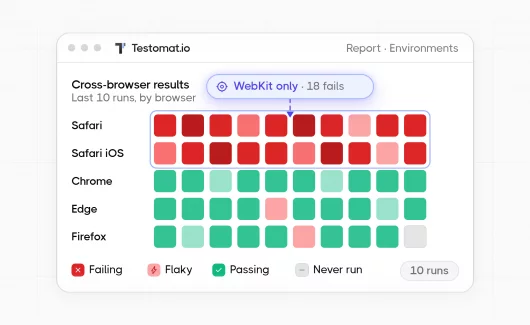
You can find your security signals inside the analytics dashboard, where you can analyze your overall test coverage, track ongoing defects and open bugs, identify flaky tests, and generate custom metrics, reports, or status summaries for stakeholders. For routing findings, Testomat.io supports creating a Jira issue directly from a failed test through its bidirectional Jira integration, which keeps both sides in sync.
The advantage for QA teams is one coverage picture. Security checks stop hiding in a separate tab and join the quality story you already tell stakeholders.
What are the Limitations of Continuous Pentesting?
You shouldn’t expect that integrating continuous penetration testing will solve every problem. It’s important to weigh the pros and cons before making it part of your security program
- Alert overload. Without strong validation and prioritization, findings arrive faster than the team can respond to them. If you skip filtering the alerts, developers learn to ignore them within weeks. Continuous testing works only when the alerts get filtered first.
- Cost. A continuous subscription is rarely cheaper than an annual penetration testing. The annual total can match or exceed traditional costs. The real argument for switching is coverage and speed.
- Setup work. Wiring findings into the tracker, threat modeling the app, and scoping human testing all take real effort. Skip this phase, and you get a flood of disconnected findings instead of fixed bugs.
- Runs alongside other security work. Continuous pentesting does not replace a security audit or a red team engagement. It works in parallel with them. Teams that try to fold every security activity into one program quickly find the gaps.
Bottom Line
Continuous pentesting is part of a broader shift in how teams handle quality and security risk. Software does not sit still long enough anymore for point-in-time assessments to be enough, and the same principle that pushed QA toward continuous testing is now doing the same with security. If you are evaluating CPT services, the operational pattern matters more than the brand on the dashboard. Look for providers that:
- Combine automated coverage with human-led depth on business logic.
- Push findings into your team’s existing tracker rather than a separate vendor portal.
- Integrate with your CI/CD pipeline rather than running parallel to it.
- Produce the audit trail your compliance program needs.
If you are coming at this from the QA side, the operational pattern is familiar: trigger on change, run continuously, surface findings in the team’s existing workflow, retest automatically, repeat. Ready to bring this pattern to your team? Start a free Testomat.io project.