





Poor software quality is costly: it cost U.S. organizations an estimated $2.41 trillion in 2022 (CISQ), and the software testing market keeps climbing from $50 billion in 2024 toward a projected $66 billion by 2030. Every SDLC runs QA methods like regression, security, and acceptance testing, yet even strong tools fail when testing is a set of disconnected moves. A software testing strategy solves that: what to test, how, when, and who owns it. This guide covers the main types of software testing strategies, the testing techniques behind them, and how to choose one.
What is a Software Testing Strategy?
A software testing strategy is a high-level blueprint that defines a team’s testing objectives, scope, and methods for validating quality across the software development lifecycle (SDLC). You will also see it called a test strategy in software testing, or simply a software test strategy.
Test strategy vs test plan
Alongside a testing strategy, one more document features in the testing phase of a software project – a testing plan. What’s the difference between a test strategy vs test plan?
In a nutshell, test strategies live up to their name by defining the vendor’s strategic approach to software testing in the form of a long-term organization-wide guideline. A test plan adopts a short-term project-based perspective by outlining a detailed roadmap for effective software testing of a specific solution.
What a software test strategy should include
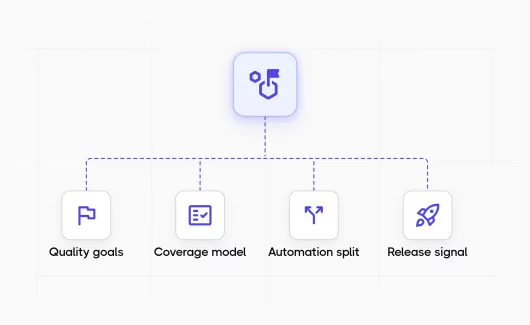
To guarantee successful testing outcomes and reliability of software products, a test strategy should include:
| Component | What it defines |
| Test objectives | The specific goals testing must achieve, such as shipping with no critical defects and meeting the SRS. |
| Scope of testing | The modules and functionality to validate, and what is left out. |
| Test approach | The testing types, techniques, and levels used, from functional and non-functional to manual and automated. |
| Schedule and resources | The people, budget, and timeline allocated to testing activities. |
| Tech stack | The test environments, tools, and test data the team relies on. |
| Roles and responsibilities | The stakeholders involved and what each one owns. |
| Risk assessment | The likely bottlenecks and the plan to avoid or mitigate them. |
| KPIs and exit criteria | The success metrics and the conditions that signal testing is complete. |
The bedrock of all strategies in software testing is the approach testers rely on.
What Are The Main Software Testing Approaches and Software Testing Techniques?
QA teams work with three core pairs of approaches: static or dynamic, structural or behavioral, and preventive or reactive. Most teams combine them rather than commit to just one.
Static vs dynamic testing techniques
When opting for static testing, QA engineers perform code and document reviews without running the product they validate. In this way, defects can be pinpointed early in the SDLC before they escalate. Dynamic testing presupposes the execution of test cases across versatile test scenarios when the application is at work. It gives experts insights into real-life use cases and problems of the product.
Structural vs behavioral testing techniques
Also known as white-box testing, structural testing digs into the system’s inner organization, examining its software code and architecture via branch, statement, and path coverage. Since it requires competence in programming languages, it is often entrusted to developers. Behavioral (or black-box) testing doesn’t involve understanding of code, so QA teams can do it perfectly well. It focuses on the system’s external functioning, checking how its responses coincide with expected results.
Preventive vs reactive testing approaches
The first approach aims to forestall defects before they actually occur, ensuring the creation of a robust software product. The second one is activated when the solution runs into problems during the integration stage or when it is committed to real-world use.
In fact, you don’t have to choose only one approach. Every testing strategy starts with the approaches your team picks, and the choice comes down to a few questions. Do you run the code or just review it? Do you look inside the logic or only at the output, and do you aim to prevent defects or catch them as they surface? Most teams blend these modes, since a balanced combination lifts the efficiency of the whole strategy. The table below shows what each approach does best and who usually owns it.
| Approach | What it does | Who usually runs it | Best for |
| Static testing | Reviews code and documents without running the app | Developers, reviewers | Catching defects early in the SDLC |
| Dynamic testing | Executes test cases against the running app | QA engineers | Real-world behavior and use cases |
| Structural (white box) | Examines internal code, branches, and paths | Developers | Coverage of logic and code paths |
| Behavioral (black box) | Checks external behavior against expected results | QA engineers | User-facing functionality |
| Preventive | Designs tests to stop defects before they appear | Whole team | Building quality in from the start |
| Reactive | Responds to defects found during integration or use | QA engineers | Fast feedback on emerging issues |
These software testing techniques in software engineering give you the building blocks. The strategies below decide how you arrange them.
What are the Main Types of Software Testing Strategies in Software Engineering?
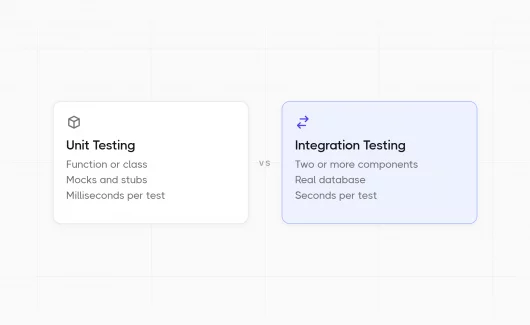
So what are testing strategies in practice? Test strategies in software testing build on the classic levels of test strategies for conventional software: unit, integration, validation, and system testing. All testing strategies can be broadly categorized into the following types.
Requirement-based testing
As it is easy to guess, its starting point is the system requirements. Test scripts are written with the purpose of validating each functional and non-functional aspect of the product, which should operate according to specifications. On the other hand, this testing type ensures that the requirements themselves are clear, consistent, and complete.
Risk-based testing
This strategy takes into account the likelihood and severity of potential issues. Testers prioritize possible failures in accordance with the mission-critical areas, functionalities, and modules technologically and business-wise, and use the risk analysis guide to direct their major efforts at eliminating those inadequacies first of all.
Data-driven testing
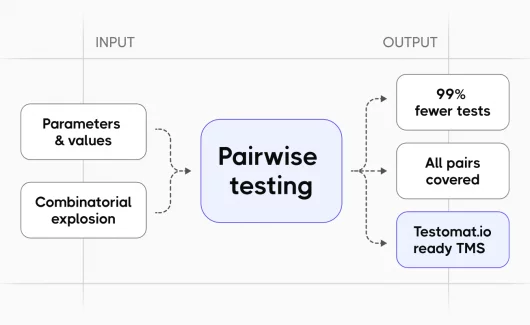
In data-driven testing, testers separate test logic and test data, storing the latter in external databases as spreadsheets or CSV files. The advantage of this strategy lies in the ability of QA engineers to reuse the same test script many times, filling it with various sets of input data to match a new scenario and receiving different outputs.
Exploratory testing
While conducting exploratory testing, experts are not only engaged in repetitive testing design and execution but also learn about the product they validate. It consists of time-limited sessions, each having a specific goal (aka test charter) focused on one feature. As they start to interact with the solution, a tester learns its functionalities, identifies potential troubles, and designs tests on the fly that validate the area of concern.
Test automation
It presupposes the involvement of automated testing on a large scale. The test automation strategy aims to optimize and accelerate the QA routine by automating repetitive tasks. However, automation testing has certain limitations since some types of checks (for instance, user acceptance testing) are more effective when submitted for manual testing by human experts.
Usability and user experience-focused testing
This testing strategy relies primarily on manual testing. It evaluates how quickly and efficiently users complete certain tasks (usability testing) and considers a user’s interaction with the software application, concentrating on their emotions (UX-focused testing). Then, the collected indices (such as time on task and success rate) and user feedback are analyzed to detect pain points and improve the product.
Early and continuous testing
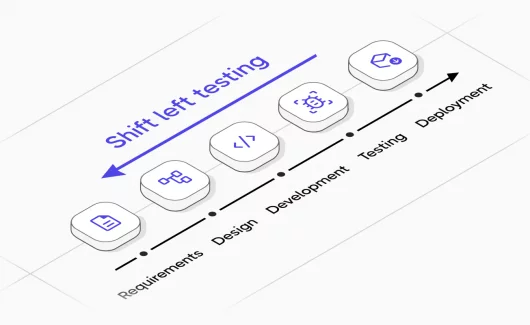
The strategy prioritizes testing early in the SDLC, making it an integral element within a CI/CD pipeline. In this way, it becomes the core of shift-left testing in which code reviews, unit testing, and static analysis are leveraged from the very beginning of the development process to pinpoint and prevent defects without delay.
Each software testing strategy fits a different situation, from locked-down requirements to fast CI/CD releases. The table below lines them up with software testing examples, so you can match a strategy to where your project actually is right now:
| Strategy | Use it when | Example | Main advantage |
| Requirement-based | Requirements are documented and stable | A banking app where each SRS line becomes a test case | Full traceability to the SRS |
| Risk-based | Time is short and areas differ in criticality | Checkout and payment tested before the help center | Effort lands on what matters most |
| Data-driven | One flow needs many input combinations | One login script run against 200 rows of credentials | Reuse one script across many data sets |
| Exploratory | The product is new or under-documented | A 90-minute charter on a freshly released feature | Finds defects scripted tests miss |
| Test automation | Suites are large and run often | A nightly regression suite in a CI pipeline | Speed and consistency at scale |
| Usability and UX | User satisfaction drives the outcome | Five users timed through a new onboarding flow | Surfaces friction real users feel |
| Early and continuous | Releases ship frequently through CI/CD | Unit tests and static analysis on every pull request | Defects caught while they are cheap to fix |
How does AI fit into a Software Testing Strategy?
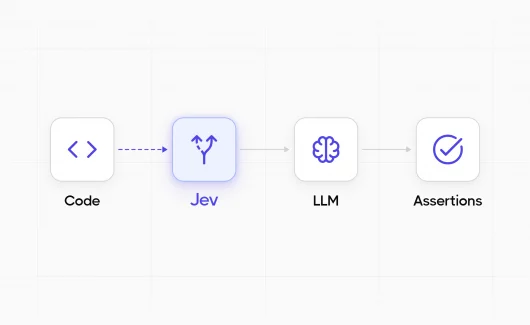
AI supports a testing strategy in four ways: it drafts test cases, expands edge cases, ranks regression runs, and summarizes failures. It speeds up preparation and triage while people keep control over intent and sign-off. You don’t hand the strategy to a model. AI removes the repetitive work that slows a QA team down, so testers spend their time on judgment calls a machine can’t make. AI is most reliable when you treat its output as a first draft and review it against real requirements.
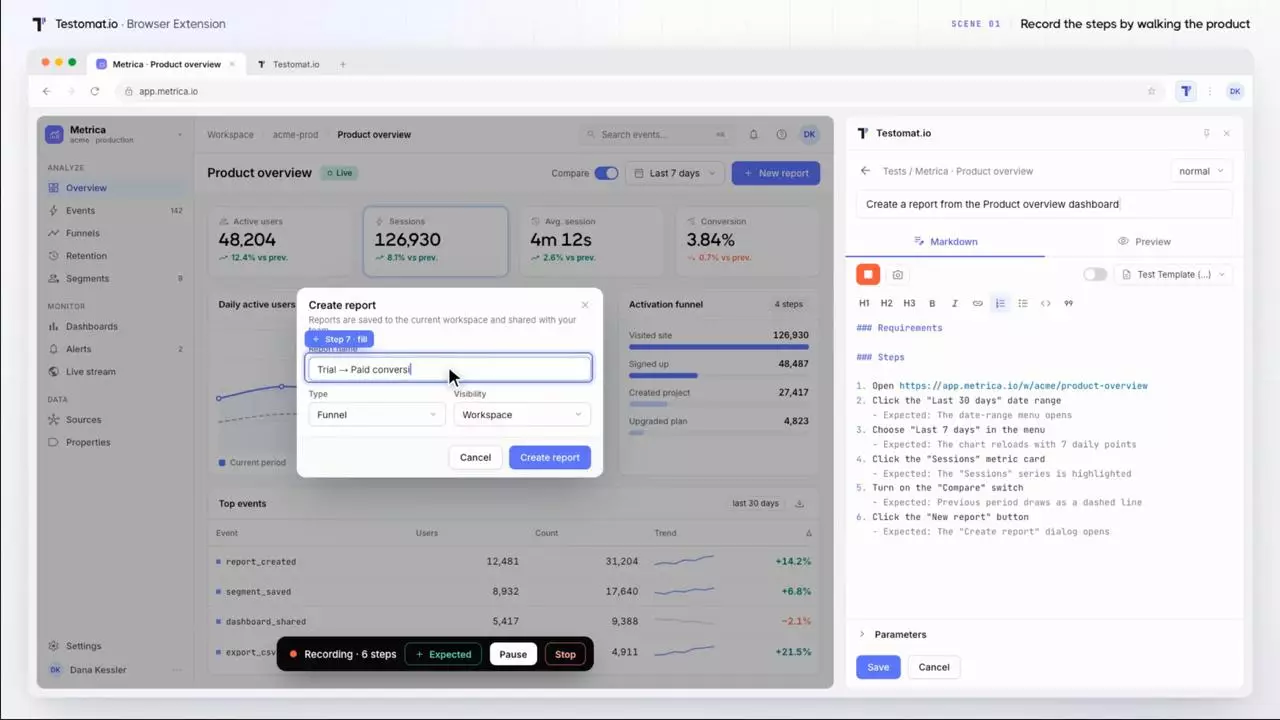
Modern test management platforms bake this in. In Testomat.io, AI test generation turns requirements and user stories into draft cases, and AI-prompted reports summarize a run with minimal input. QA engineers who already test manually can see how this works in our walkthrough of manual testing with AI.
Where AI helps
Across the strategies above, a few tasks benefit immediately:
- Draft test cases from requirements, tickets, or user stories.
- Expand negative and edge-case scenarios that a checklist would miss.
- Select which regression tests to run based on what changed.
- Summarize failed runs and group failures by likely root cause.
- Detect flaky tests through pattern analysis instead of manual review.
Where AI needs a human
AI still needs a human check, so review it closely for:
- Sensitive data, where company data policies always come first.
- Security conclusions, which need dedicated tools and expert review.
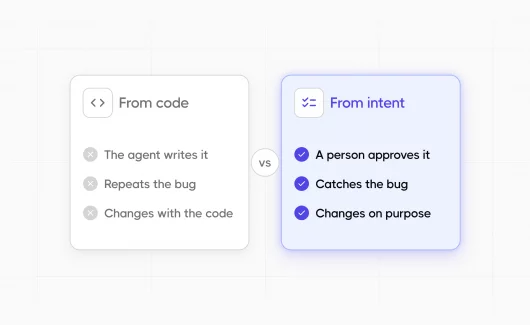
- Green results that are not tied to a clear assertion or expected outcome.
- Generated tests that map back to no requirement or risk.
AI assist by strategy
Each of the testing strategies leans on AI differently. Some gain the most at the design stage, others during triage or maintenance. This table maps each one to where AI makes the biggest difference, and to the decision that still belongs to a person.
| Strategy | Where AI adds value | Keep a human on |
| Requirement-based | Generate cases from each requirement | Coverage against the SRS |
| Risk-based | Rank areas by change impact and history | The final call on what ships |
| Data-driven | Produce input combinations and edge values | Expected outputs |
| Exploratory | Suggest charters and session notes | The actual investigation |
| Test automation | Maintain locators, triage flaky runs | Assertions and test intent |
| Usability and UX | Cluster feedback and session data | Real user emotion |
| Early and continuous | Summarize CI runs, flag hotspots | Release go or no-go decisions |
For a deeper view of proactive, agent-driven testing, see how Testomat.io approaches AI orchestration.
How to Choose the Right Software Testing Strategy
You should consider several key factors when you choose a testing strategy.
- Test scope and objectives. You should understand what software features and functionalities the testing should cover and what the ultimate goal of the procedure is.
- Project requirements and constraints. Here belong types of products submitted for validation (mobile apps, e-commerce websites, CRM systems, you name it), unique expectations each product should meet (for instance, cross-browser or cross-device compatibility), project size (simple, where a minimal number of tests are necessary, or complex, necessitating a combination of multiple checks), and industry context (depending on the vertical the solution is developed for, it should undergo different tests).
- Development methodology. The Waterfall or Agile methodologies used during the development call for different checks.
- Testing approach, levels, and types. Various strategies include a range of test design techniques that suit them better.
- Tools and environments. The same is true here. However, if you onboard a comprehensive testing platform honed for conducting versatile checks, it can become a key component of any testing strategy.
- Available budget. Some testing types (such as system testing, performance testing, user acceptance testing, and manual regression testing) are more expensive to conduct, so you should understand whether you can afford them.
- Testing team size and skillset. Human resources at your disposal and the competencies they wield have a direct impact on choosing this or that strategy.
- Security and regulations. In some spheres (like healthcare or banking), the data software products operate comes under stringent compliance rules, so your testing strategy should make allowance for such cases.
- Flexibility. The testing strategy should have considerable adaptability potential to be tailored at will as project requirements change or market conditions evolve.
The choice of the robust strategy is vital, but even the best test strategies will do you no good if you can’t implement them properly.
The Best Practices for Developing and Implementing a Test Strategy
Here are some tips on how to create an effective software testing strategy and then implement it correctly.
An early start is a must
Various QA procedures should be involved at the earliest possible stage. The sooner you engage in validating different software components and functionalities, the less headache you will have with eliminating bugs and detecting issues.
Align with business outcomes
Remember that the perfect functioning of a software product is crucial, but it’s not an end in itself. Each check should aim to achieve some business goal and support user needs.
Automate wisely
An all-encompassing automation is a coveted dream for most testers, but like any dream, it is hardly attainable. You should automate the most critical and high-value areas first of all. Besides, there are some tests that can’t be delegated to machines since they require human oversight and intuition.
Update documentation regularly
Approaches and technologies evolve constantly. Business priorities and customer preferences shift frequently. You should trim your documentation every time a change occurs to keep the strategy current with the latest software testing trends and volatile market conditions.
Foster collaboration
Testing is never an effort for a single person. Moreover, it is not the province of the QA team only. Developers, project managers, business stakeholders, and users should be involved in validating a software application and kept abreast of the progress of testing and its outcomes. Collaboration and test management tools will help you avoid departmental silos and let everybody stay on the same page.
Track results
Using KPIs to measure testing efficiency is a natural thing to do. Yet not all KPIs are equal in importance. You should prioritize those that reflect customer impact and business goal attainment. After all, you want the solution to satisfy users and bring income to its owners, not just display excellent indices that have little practical value.
Bottom Line on Software Testing Strategies
A software testing strategy is a comprehensive document containing a set of the most general guidelines for conducting software checks. Typically, such a strategy includes test objectives, scope, and approach, a roster of resources (human, financial, and technological) required for performing tests, the anticipated timeline, the QA team’s roles and responsibilities, risk hedging measures, and KPIs to measure the outcomes.
Testing strategies in software testing are classified into requirement-based, risk-based, data-driven, exploratory, automated, UX-focused, and continuous testing types. To opt for the strategy that dovetails with your particular use case, you should pay attention to project specifications and constraints, the toolset and personnel skills it will require, the budget you can allocate, compliance rules, and flexibility, enabling you to attune it to ever-shifting project needs.
To maximize the efficiency of a testing strategy, you should introduce it early in the SDLC, align it with business expectations, utilize automation intelligently, update it regularly, promote collaboration between stakeholders, and leverage high-end software testing tools.
Testomat.io is built for exactly this. It runs manual, automated, and AI-generated tests from one workspace and turns every run into a clear, traceable report, so the strategy you designed stays visible from first commit to release. 👉 Start for free or book a demo.