





Software testing is an essential part of any software development life cycle. It ensures a software solution’s functionality, reliability, and efficiency and is vital to quality assurance. Investing time in reading software testing books boosts your understanding of these testing mechanisms, thus ensuring the project’s quality and contributing to your professional growth. Therefore, I have prepared the best books on testing I have read that are still relevant at the time of writing.
Full Stack Testing
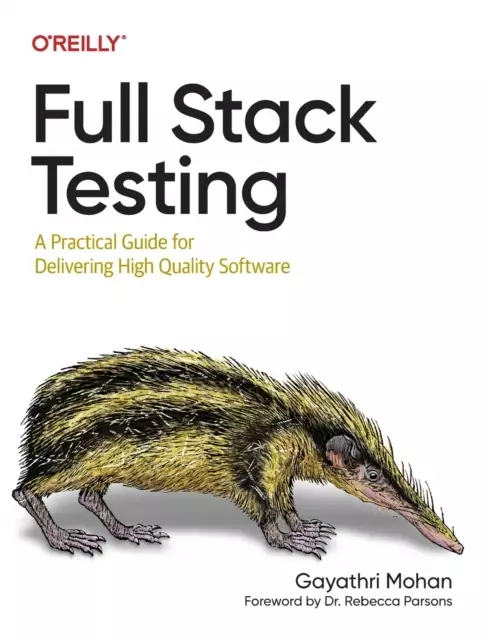
Testing is a critical discipline for any organization looking to deliver high-quality software. This practical book provides software developers and QA engineers with a comprehensive one-stop guide to testing skills in 10 different categories. You’ll learn appropriate strategies, concepts, and practical implementation knowledge you can apply from both a development and testing perspective for web and mobile applications.
Author Gayathri Mohan offers examples of more than 40 tools you can use immediately. You’ll acquire the skills to conduct exploratory testing, test automation, cross-functional testing, data testing, mobile testing, and visual testing, as well as tests for performance, security, and accessibility. You’ll learn to integrate them in continuous integration pipelines to gain faster feedback. Once you dive into this guide, you’ll be able to tackle challenging development workflows with a focus on quality.
With this book, you will:
→ Learn how to employ various testing types to yield maximum quality in your projects
→ Explore new testing methods by following the book’s strategies and concepts
→ Learn how to apply these tools at work by following detailed examples
→ Improve your skills and job prospects by gaining a broad exposure to testing best practices
Effective Software Testing
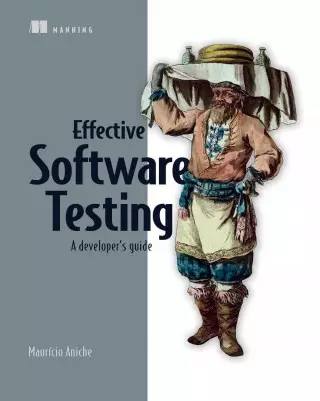
Go beyond basic testing! Great software testing makes the entire development process more efficient. This book reveals a systemic and effective approach that will help you customize your testing coverage and catch bugs in tricky corner cases.
In Effective Software Testing you will learn how to:
→ Engineer tests with a much higher chance of finding bugs
→ Read code coverage metrics and use them to improve your test suite
→ Understand when to use unit tests, integration tests, and system tests
→ Use mocks and stubs to simplify your unit testing
→ Think of pre-conditions, post-conditions, invariants, and contracts
→ Implement property-based tests
→ Utilize coding practices like dependency injection and hexagonal architecture that make your software easier to test
→ Write good and maintainable test code
Introduction to Software Testing
Get started and hit the ground running in the world of software testing. This simple and practical guide teaches you the fundamentals of software testing, with no prior experience required.
You will start by learning functional and non-functional software testing. Then you will gain an understanding of the primary responsibilities of a tester in the Software Development Life Cycle and how to plan and execute testing activities. You will also learn how testing applies to an agile environment, what challenges you might face in your day-to-day life as a tester, and how to overcome them. You will learn the most commonly used test design techniques, with ample examples and exercises to practice yourself.
By the end of this book, you will understand the software testing ecosystem, from its types, techniques, and tools, to test planning, execution, and reporting.
What You Will Learn
→ Master the fundamentals of Software Testing
→ Gain an understanding of different software testing types
→ Plan and execute testing activities
→ Apply test design techniques to concrete examples
API Testing and Development with Postman
It is a practical guide to creating, testing, and managing APIs for automated software testing.
Postman enables the exploration and testing of web APIs, helping testers and developers figure out how an API works. With Postman, you can create effective test automation for any APIs. If you want to put your knowledge of APIs to work quickly, this practical guide to using Postman will help you get started.
The book provides a hands-on approach to learning the implementation and associated methodologies that will have you up and running with Postman in no time. Complete with step-by-step explanations of essential concepts, practical examples, and self-assessment questions, this book begins by taking you through the principles of effective API testing. A combination of theory coupled with real-world examples will help you learn how to use Postman to create well-designed, documented, and tested APIs. You’ll then be able to try some hands-on projects that will teach you how to add test automation to an already existing API with Postman, and guide you in using Postman to create a well-designed API from scratch. By the end of this book, you’ll be able to use Postman to set up and run API tests for any API that you are working with.
What You Will Learn:
→ Find out what is involved in effective API testing
→ Use data-driven testing in Postman to create scalable API tests
→ Understand what a well-designed API looks like
→ Become well-versed with API terminology, including the different types of APIs
→ Get to grips with performing functional and non-functional testing of an API
→ Discover how to use industry standards such as OpenAPI and mocking in Postman
Complete Guide to Test Automation
Techniques, Practices, and Patterns for Building and Maintaining Effective Software Projects.
Rely on this robust and thorough guide to build and maintain successful test automation. As the software industry shifts from traditional waterfall paradigms into more agile ones, test automation becomes a highly important tool that allows your development teams to deliver software at an ever-increasing pace without compromising quality.
Even though it may seem trivial to automate the repetitive tester’s work, using test automation efficiently and properly is not trivial. Many test automation endeavors end up in the “graveyard” of software projects. Many things affect the value of test automation, and also its costs. This book aims to cover all of these aspects in great detail so you can make decisions to create the best test automation solution that will not only help your test automation project to succeed but also allow the entire software project to thrive.
One of the most important details that affects the success of the test automation is how easy it is to maintain the automated tests. Complete Guide to Test Automation provides a detailed hands-on guide for writing highly maintainable test code.
In conclusion, whether you’re an aspiring software tester, an experienced QA engineer, or a project manager overseeing software development, reading software testing books should be part of your ongoing professional development. Not only will it improve the quality of the software projects you’re involved with, but it will also further your individual career growth in the diverse and dynamic field of software testing. As with most technical disciplines, continuous learning is the key to success, and books contain a wealth of this knowledge.
More Reading Picks for Every QA Role
The five books above cover the core. If you want to keep going, here’s a quick reading map by goal, with the right type of book for each path.
For QA Engineers Just Starting Out
If you’re new to testing, the most valuable qa testing books are the ones that teach principles, not tools. Start with Introduction to Software Testing above, then move to titles like Lessons Learned in Software Testing by Cem Kaner, James Bach, and Bret Pettichord, or Agile Testing by Lisa Crispin and Janet Gregory. These shape how you think about quality before you commit to a specific stack.
For Manual Testers Moving into Automation
The best automation testing books balance code with strategy. Complete Guide to Test Automation (above) is the textbook. Add Hands-On Mobile App Testing by Daniel Knott if you work with mobile, and Selenium WebDriver 3 Practical Guide or any modern Playwright/Cypress book if you’re moving into UI automation. Reading these alongside actual coding practice is how the shift from manual to automation actually sticks.
For QA Leads and Test Managers
The strongest quality assurance books for leads focus on process, metrics, and team dynamics. Books like How Google Tests Software by James Whittaker, Perfect Software and Other Illusions About Testing by Gerald Weinberg, and The Phoenix Project (technically a DevOps novel, but the testing lessons are sharp) shape how you set up a team to ship quality at scale.
For Developers Who Want to Test Their Own Code
Developers benefit most from books that treat testing as an engineering discipline. Effective Software Testing (above) is the top pick. Pair it with Working Effectively with Legacy Code by Michael Feathers and Growing Object-Oriented Software, Guided by Tests by Steve Freeman and Nat Pryce. These are arguably some of the best books on software testing for engineers who write production code every day.
For API and Performance Testers
Beyond API Testing and Development with Postman, look at The Art of Application Performance Testing by Ian Molyneaux and RESTful Web APIs by Leonard Richardson. They build the foundation underneath any modern API testing strategy.
How to Get the Most Out of Software Testing Books
Reading a testing book cover to cover isn’t always the best use of your time. Try this instead:
- Read with a project in mind. Apply each chapter to something you’re actually working on. Concepts stick when you use them within a week of learning them.
- Take notes you’ll re-read. A summary of three takeaways per chapter beats a highlighted PDF you never open again.
- Pair books with practice. After a chapter on property-based testing, write one. After a chapter on test pyramid design, audit your real test suite against it.
- Mix breadth and depth. Alternate between broad books on software testing (strategy, process) and deep ones (a single tool, a single technique). One trains your judgment, the other trains your hands.
- Discuss with peers. A book club inside your QA team turns passive reading into team-wide upskilling.
Wrapping Up
Whether you’re an aspiring software tester, an experienced QA engineer, or a project manager overseeing software development, reading software testing books should be part of your ongoing professional development. It improves the quality of the software projects you work on, and it pushes your career forward in a field that doesn’t stand still. As with most technical disciplines, continuous learning is the key, and the best software testing books still hold more long-term value per hour than any single tutorial or course.
Pick one book from the list above, give it two weeks, and apply at least one idea to a real project before you move on to the next.